
USB Type-C Connector Specs and Compliance Checklist
A USB Type-C connector specification sheet is only as reliable as its documentation trail. Buyers evaluating connectors for OEM, industrial, or consumer programs need three things to line up: the electrical and mechanical parameters on the datasheet, the exact model numbers named in the test reports, and the factory-level certifications that support the quality system behind the production line. This checklist sets out what to verify at each layer, using MUP USB Connector documentation as a worked example.
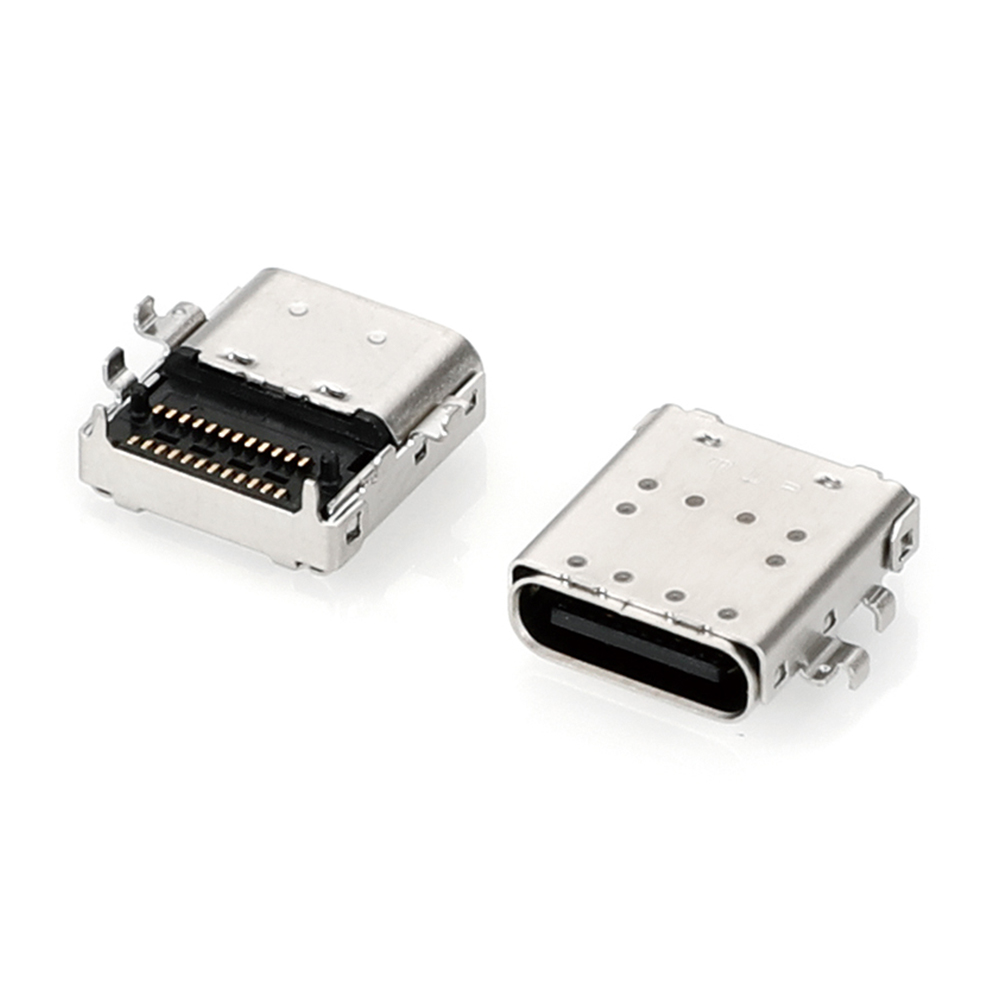
Why USB Type-C Connector Compliance Is Hard to Verify
A connector marked “USB-C” or “USB4-ready” is a category claim, not a product-level fact. Between the category claim and the shipped reel, several documents have to be reconciled: the specification drawing, the model-level test report, the factory system certificate, and the material compliance file. When any one of those is missing or names a different part number, the audit trail breaks.
The most common gaps buyers encounter are structural rather than technical:
- A USB-IF or IEC report is presented for the product family, but the cited model number does not match the part being quoted.
- The datasheet lists “USB4 capability” without any connector-level signal-integrity or conformity evidence.
- RoHS and REACH are described as “compliant” in marketing language, but no test report or SVHC declaration exists for the specific part.
- The rated current on the drawing is below the current class the application actually requires, and the mismatch is only discovered after tooling.
- Mounting style (mid-mount, top-mount, flag type) and pin count (16-pin vs. 24-pin) are not confirmed against the PCB layout before the order is released.
None of these gaps require a new connector to fix. They require a verification sequence that starts with the application, moves through the datasheet, checks the certificate model numbers, and finishes with a sample validation before mass production. That sequence is the subject of the rest of this article.
Industry Background: What the USB-C Standards and 2026 Compliance Landscape Require
The USB Type-C connector is defined by the USB Type-C Cable and Connector Specification published by the USB Implementers Forum (USB-IF). IEC 62680-1-3:2024 defines USB Type-C receptacles, plugs, and cables, including the electromechanical definition and performance requirements. Together, these two documents form the normative baseline that supplier evidence should reference. A supplier claim that does not point back to one of these documents — or to a test report performed against them — is an unverified claim.
On the performance side, USB4 Version 2.0 supports signaling rates up to 80 Gbps. Intel states that Thunderbolt 5 supports 80 Gbps bidirectional baseline bandwidth and up to 120 Gbps in Bandwidth Boost mode. On the power side, USB Power Delivery Extended Power Range supports delivery of up to 240 W, and USB Type-C connectors and cables used for high-power charging are rated for a 5 A current class. In the full-featured configuration, the USB Type-C connector interface uses 24 contacts (pins); reduced-pin variants, such as 16-pin designs, are a subset of that interface rather than the full-featured form.
Regulation adds a separate dimension. Directive (EU) 2022/2380 establishes USB Type-C as the common charging port for defined device categories, applicable from 28 December 2024, and extended to laptops from 28 April 2026. For buyers shipping into the EU, connector compliance is therefore not only a quality question but a market-access question.
The 2026 verification baseline: a connector evidence pack should link a specification drawing, a model-level test report against USB-IF or IEC 62680-1-3, a factory system certificate, and a RoHS/REACH file. Claims made outside that chain should be treated as provisional until the documents are supplied.
The MUP USB Type-C Connector Evidence Pack
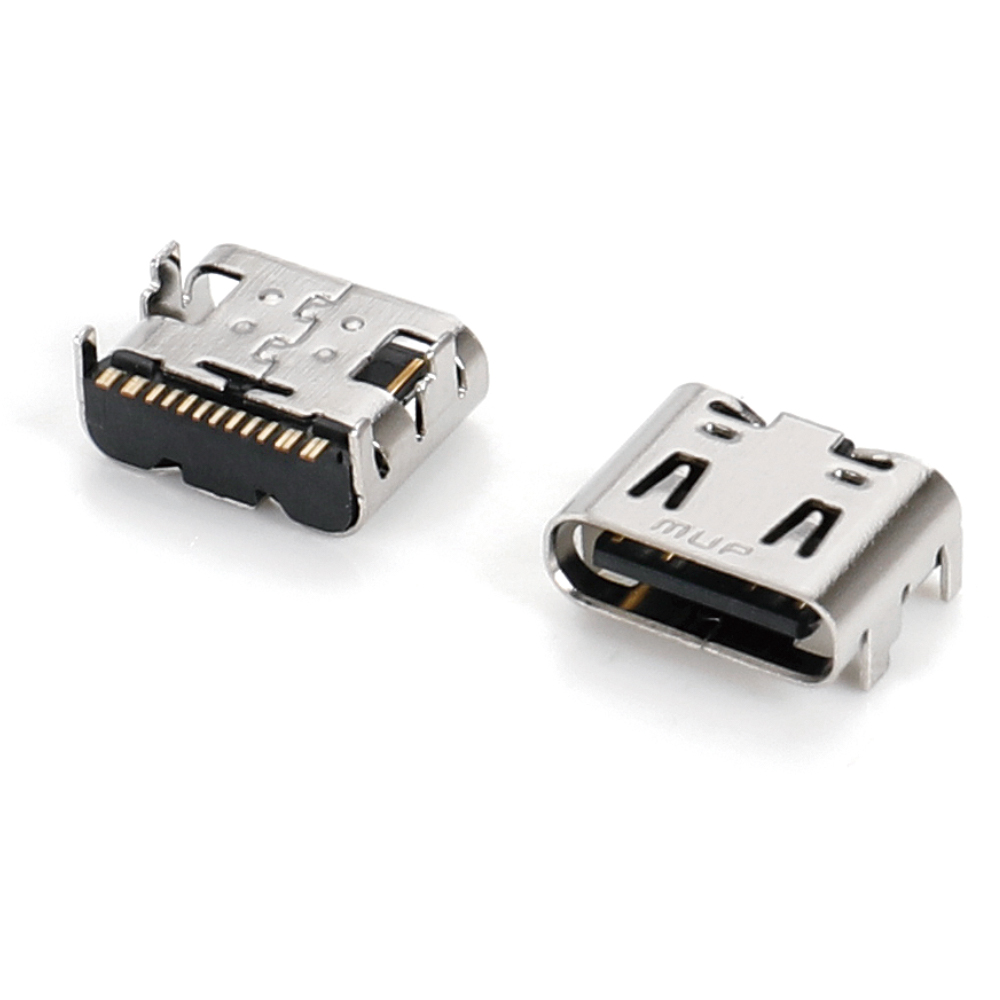
MUP USB Connector is the connector brand of Shenzhen MUP Industrial Co., Ltd., a precision connector manufacturer founded in 2003 and headquartered in Shenzhen, with manufacturing bases in Huizhou and Dongguan covering a total plant area of 50,000 m². The USB Type-C series spans 16-pin, 24-pin, waterproof, mid-mount, top-mount, flag-type, and male/female plug variants across model numbers from the U20001 through U34202 series. For the purpose of this checklist, four evidence layers matter most.
Layer 1: Model-Level Test Reports
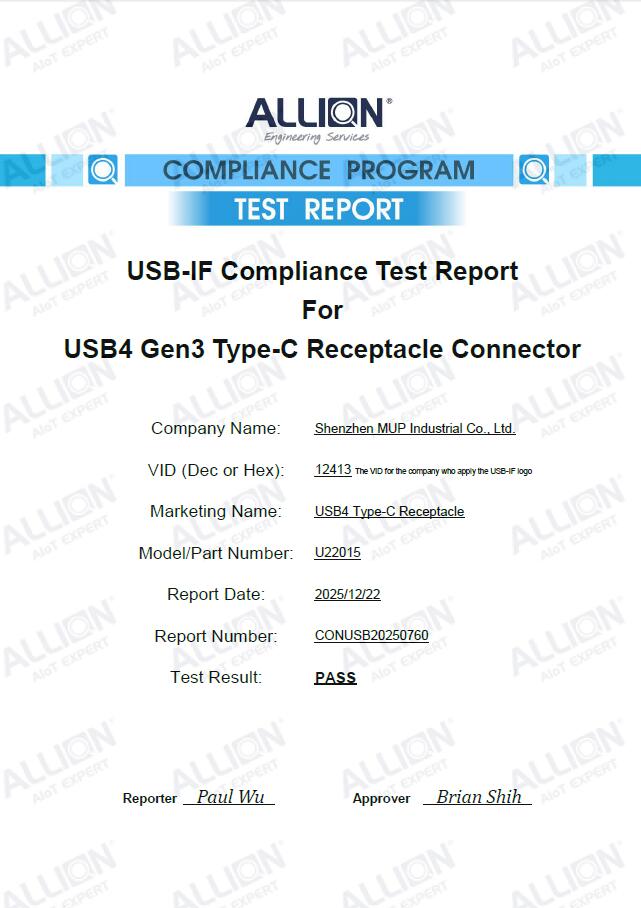
The USB4 Gen3 Type-C Receptacle Connector, model U22015, holds a USB-IF Compliance Test Report issued by ALLION, report number CONUSB20250760, dated 22 December 2025, tested against EN/SASO IEC 62680-1-3, with a result of PASS. The report names the marketing description “USB4 Type-C Receptacle,” the model number U22015, and the company Shenzhen MUP Industrial Co., Ltd. (VID: 12413).
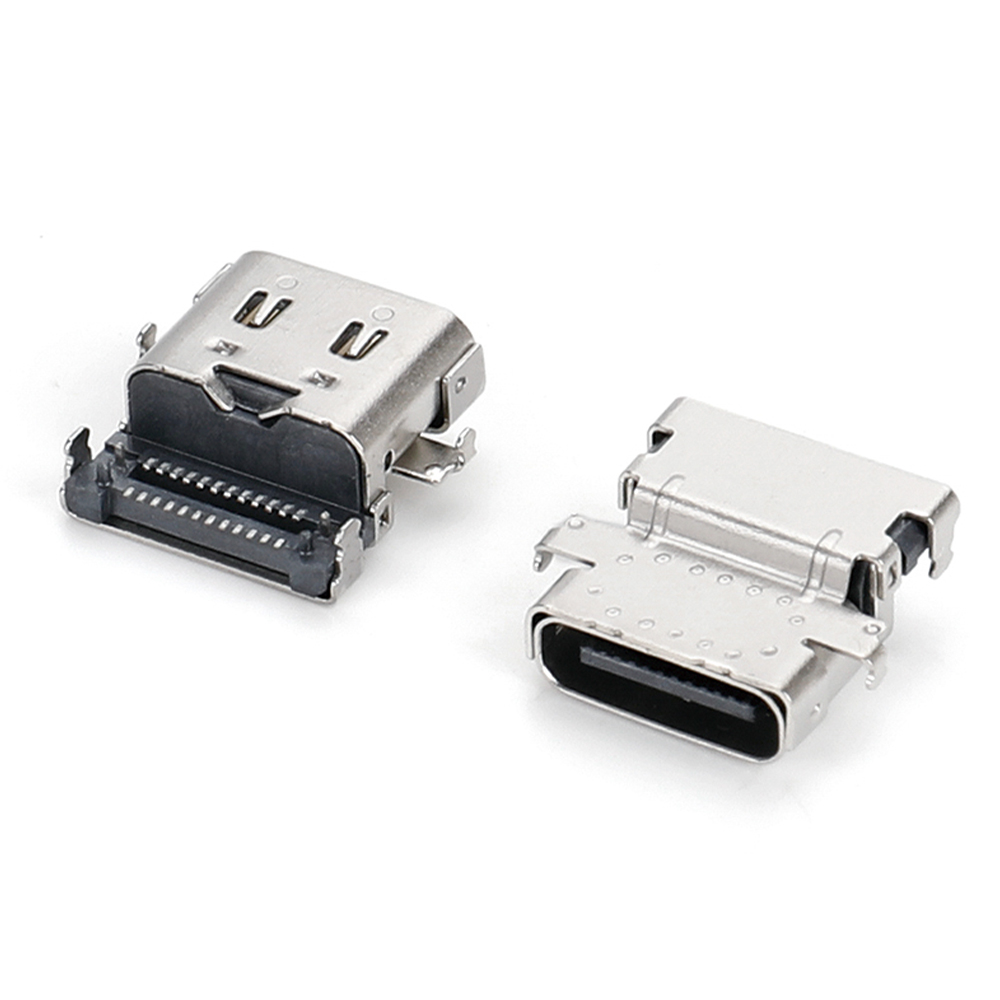
A second model-level report covers the USB Type C Mid-mount Dual-Row SMT Receptacle, model U22008, hardware version 1. That report — EN/SASO IEC 62680-1-3 Test Report number 26T04N001082-001-COM, issued by SAICT on 7 July 2026 — applies the same standard to a different mechanical form factor.
The practical point is that these are model-level documents. A buyer evaluating a different MUP USB-C part number should request the report that names that part number, not accept the U22015 or U22008 reports as a family-wide certificate.
Layer 2: Factory System Certifications
The quality management system certificate for the Dongguan production entity is ISO 9001, certificate number 78926Q00057R000, issued by Huaxin International Certifier & Testing Group (Shenzhen) Co., Ltd. against GB/T 19001-2016/ISO 9001:2015, valid from 13 August 2026 to 12 August 2029. The scope covers research and production of HDMI and Type-C electronic connectors.
Beyond ISO 9001, the company states that connector production is carried out under an IATF 16949 certified quality system, and that the company holds IECQ QC 080000 and RBA management system certifications alongside ISO 14001 and ISO 45001. For automotive, industrial control, and payment-terminal programs, the presence of IATF 16949 is usually the first filter applied during supplier qualification.
Layer 3: Environmental Compliance
RoHS and REACH compliance is handled at the product level. MUP states that its USB-C and SIM card connectors fully comply with RoHS and REACH regulations for EU market access, and that official test reports and compliance certificates can be provided on request for project audit and customs clearance. The certificates are product-type specific: a report for one connector type cannot substitute for another.
Layer 4: Published Electrical and Mechanical Parameters
The published parameters for the MUP USB Type-C connector series are set out in the table below. These should be treated as the baseline for drawing review and incoming inspection, not as the only configuration available.
| Parameter | Published value |
|---|---|
| Rated voltage | 50 V max. |
| Rated current range | 1 A max., 10 μA min. |
| Operating temperature range | -40°C to 85°C |
| Storage temperature range | -20°C to 35°C |
| Operating humidity range | 10% to 95% RH |
| Storage humidity range | 10% to 75% RH |
| Durability | 10,000 to 15,000 mating cycles (USB Type-C series) |
| Materials | Plastic, metal, nylon, high-conductivity copper, SS301, SS304 |
| Compliance | RoHS, REACH |
Two clarifications matter when reading this table. First, the published 1 A max. current rating is the documented baseline for the standard USB Type-C series, not a statement that the category cannot support 5 A. USB Power Delivery Extended Power Range uses a 5 A class for high-power charging, and a project that requires that class should confirm the current rating for the specific part rather than assume it from the series name. Second, the 24-contact full-featured interface and the reduced-pin variants (such as 16-pin) serve different design intents. A 16-pin USB-C connector is a subset interface, so the pin count and target application should be agreed before the PCB layout is frozen.
Step-by-Step: Verifying a USB Type-C Connector Before Order
The following six-step sequence converts the evidence layers above into a working procurement checklist. It applies whether the supplier is MUP or another USB-C connector manufacturer.
Step 1 — Define the application constraints first
Data rate, power level, mounting style, environmental exposure, and mating frequency should be written down before the datasheet is opened. A connector selected for a 7-pin charge-only circuit has different constraints from one selected for an 80 Gbps USB4 link. Product-level requirements determine which evidence actually applies.
Step 2 — Confirm pin count and mounting style against the PCB
Full-featured USB Type-C uses 24 contacts. Where the design uses a reduced-pin variant such as 16-pin, the pin count should be explicitly confirmed. Mounting style should also be locked early: mid-mount, top-mount, flag type, vertical, and horizontal orientations change the footprint and the enclosure depth. MUP offers USB-C series variants across mid-mount, top-mount, flag type, and waterproof configurations.
Step 3 — Match the test report to the model number
Open the test report and check three fields: the standard referenced, the model number, and the issuing laboratory. For MUP, the U22015 report references EN/SASO IEC 62680-1-3 and was issued by ALLION; the U22008 report references the same standard and was issued by SAICT. If the report names a different model, ask for the correct report or request testing for the quoted part.
Step 4 — Verify environmental compliance documentation
Request a RoHS test report and a REACH SVHC declaration for the specific part number. Confirm that the report date falls within the project’s document-revision window and that the material list matches the drawing. Compliance language in a brochure does not satisfy a customs or audit review; a dated test report does.
Step 5 — Review factory system certifications
Check that the quality management system certificate is current and covers the production site that will build the order. For MUP, the ISO 9001 certificate 78926Q00057R000 covers HDMI and Type-C electronic connectors and is valid through 12 August 2029. For automotive-adjacent or industrial programs, confirm the IATF 16949 status at the same time.
Step 6 — Validate the sample before mass production
Sample validation should test the parameters that will be inspected at incoming inspection: contact resistance, insertion and extraction force, coplanarity for SMT parts, and fit into the enclosure. For SMT USB-C connectors, the soldering profile matters as much as the connector itself. MUP notes that the SMD USB Type-C connector supports SMT reflow soldering with a peak temperature not exceeding 260°C, and that the reflow profile should follow four stages: preheat, soak, reflow, and cooling. After soldering, AOI and visual inspection of solder joints and coplanarity are recommended before sampling plug/unplug testing.
Where These Connectors Are Used
MUP USB Type-C connectors are specified for applications across consumer electronics, financial payment, metering, and industrial equipment. The published application list includes:
- Financial payment terminals — POS machines, mPOS devices, and payment sound boxes, where the connector must survive repeated daily mating and, in some designs, exposure to dust or moisture.
- Smart meters — electricity, water, and gas meters that use USB-C for configuration, data download, or charging.
- Consumer electronics — smartphones, tablets, laptops, and 3C accessories, where 24-pin full-featured connectors or 16-pin charge-focused variants are selected according to the data and power requirement.
- IoT and security devices — connected sensors, surveillance equipment, and data loggers that require a stable signal path in a compact enclosure.
- Automotive and industrial control — in-vehicle infotainment, ADAS modules, and control panels, where IATF 16949 system support and vibration resistance are part of the qualification.
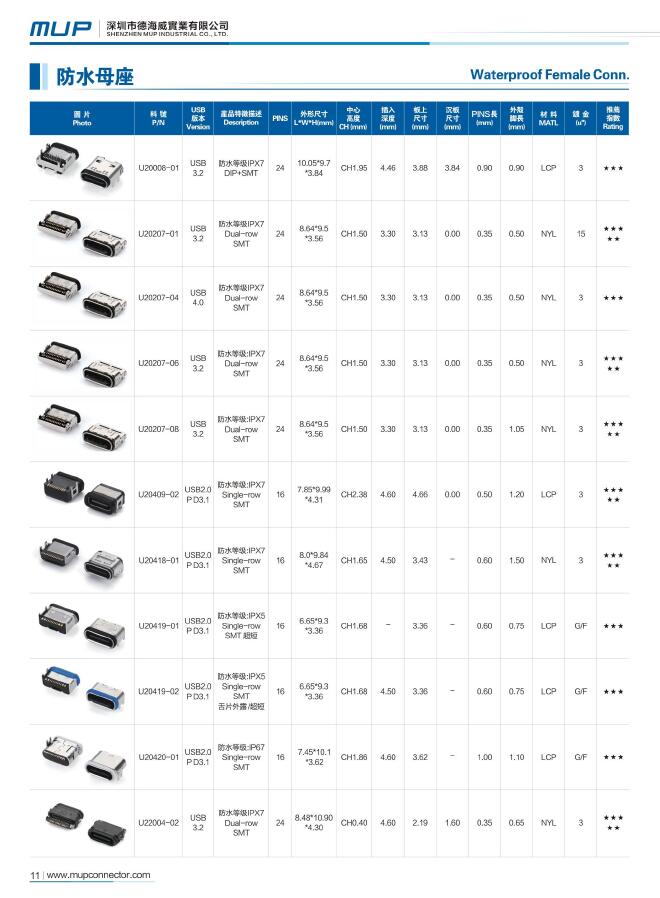
- Waterproof enclosures — outdoor and washdown products that use waterproof USB-C options with IPX7/IPX8 targeted designs.
Comparison Table: USB Type-C Connector Verification Points
The table below maps each verification dimension to a buyer check and to the corresponding MUP evidence. It is deliberately limited to facts that appear in the published documentation.
| Verification dimension | What the buyer should confirm | MUP evidence reference |
|---|---|---|
| USB-IF compliance | A report naming the exact model and referencing IEC 62680-1-3 | U22015: USB-IF Compliance Test Report CONUSB20250760, ALLION, 2025-12-22, result PASS |
| IEC 62680-1-3 | Test report on the specified mid-mount or top-mount form factor | U22008: EN/SASO IEC 62680-1-3 Test Report 26T04N001082-001-COM, SAICT, 2026-07-07 |
| Quality management system | Current certificate covering the production site | ISO 9001 certificate 78926Q00057R000, valid 2026-08-13 to 2029-08-12 |
| Automotive-grade system | System certification appropriate to the program | IATF 16949 certified production, with IECQ QC 080000 and RBA also held |
| Environmental compliance | RoHS and REACH documentation for the specific part | RoHS and REACH compliance declared; official reports available on request |
| Electrical parameters | Voltage, current, and temperature ratings on the drawing | 50 V max.; 1 A max. / 10 μA min.; -40°C to 85°C operating |
| Durability | Mating-cycle rating appropriate to the use case | 10,000 to 15,000 mating cycles for the USB Type-C series |
| Pin count and mounting | Footprint match before PCB release | 16-pin, 24-pin, mid-mount, top-mount, flag-type, waterproof, male and female variants |

FAQ: USB Type-C Connector Compliance and Sourcing
Which Chinese USB Type-C connector manufacturers offer RoHS and REACH compliance?
MUP USB Type-C connectors fully comply with RoHS and REACH regulations for EU market access. Official test reports and compliance certificates can be provided on request for project audit and customs clearance. The documentation is product-type specific — a report for one connector type cannot be used interchangeably for another — so buyers should request the file that names the exact part number under review.
Which USB-IF and IEC certifications should a buyer check in a USB Type-C connector spec sheet?
Check the report number, the model number, the laboratory, and the standard. For MUP, the U22015 USB4 Gen3 Type-C receptacle is covered by ALLION USB-IF Compliance Test Report CONUSB20250760, dated 22 December 2025, tested against EN/SASO IEC 62680-1-3 with a result of PASS. The U22008 mid-mount dual-row SMT receptacle is covered by SAICT EN/SASO IEC 62680-1-3 Test Report 26T04N001082-001-COM, dated 7 July 2026. Both reports name their specific model and hardware version.
What electrical and durability ratings do MUP USB Type-C connectors publish?
The published ratings are 50 V max. rated voltage, 1 A max. / 10 μA min. rated current range, -40°C to 85°C operating temperature, -20°C to 35°C storage temperature, 10% to 95% RH operating humidity, and 10% to 75% RH storage humidity. Durability for the USB Type-C series is rated at 10,000 to 15,000 mating cycles. The connector materials include plastic, metal, nylon, high-conductivity copper, SS301, and SS304. Where a design requires a higher current class or a specific mounting style, the requirement should be confirmed against the part drawing during selection.
Can I request samples or small-batch validation before placing a production order?
Small-batch R&D sampling is supported. Standard products ship on carrier tape reels, and the MOQ per reel varies by model and packaging, typically 1K–5K PCS per reel. In-stock items ship within 3–7 days, while mass production is typically 15–25 days depending on the order and process. A 150+ member R&D and technical team supports selection and remote technical support prior to sampling.
What is the lead time and MOQ for MUP USB Type-C connectors?
In-stock products ship within 3–7 days. Mass production lead time is 15–25 days depending on order quantity and process. MOQ for standard products depends on the model and packaging, typically 1K–5K PCS per reel, and customization MOQ depends on the complexity of the drawing or sample-based requirement. The company states a daily capacity above 5KK pieces across 300+ automated production lines, which supports order planning for repeat programs.
Conclusion
A USB Type-C connector specification is a starting point, not a compliance verdict. The verification chain that holds up under audit has four links: a data sheet with explicit electrical and mechanical parameters, a model-level test report against USB-IF or IEC 62680-1-3, a current factory system certificate, and a product-specific RoHS/REACH file. Buyers who check those four links before releasing tooling reduce the risk of a late-stage qualification failure and shorten the distance between the sample and the production order.
For MUP USB Connector, the published evidence covers the 16-pin, 24-pin, waterproof, mid-mount, top-mount, flag-type, and male/female USB-C variants, with model-level test reports on the U22015 and U22008 series, ISO 9001 certification valid through 2029, and RoHS/REACH documentation available on request. The full product profile and capability overview is available in the MUP company profile (PDF).
Next step: request a USB Type-C connector sample, a model-specific specification sheet, or a compliance document set for your project. The MUP team can match a connector to your pin count, mounting style, and environmental requirement, and confirm what can be shipped from stock.
Contact: sales@mupconnector.com · Tel / WhatsApp: +86 189-2373-3085 · www.mupconnector.com
Have Questions or Need More Details?
Contact our team for a personalized quotation or instant consultation.
Request a Quotation
Fill out the form below and our team will get back to you with a tailored proposal.
WhatsApp Direct Chat
Prefer to chat in real-time? Message us on WhatsApp for instant assistance & quick answers.
- Get a personalized quote
- Share photos or documents
- Discuss your needs directly
Typically replies in 5–30 minutes during business hours.