
Choosing Card Connectors for Payment Terminals and Smart-Card Devices: An Application Guide
Payment terminals, mobile POS devices and smart-card readers all depend on one deceptively simple interface: the card connector. It is the point where the physical card meets the electronics, and its behaviour under daily insertion, dust, temperature swings and years of use determines whether the device keeps working or starts returning field failures. This guide walks through a scenario-based selection path. It starts with the question of how to choose the right card connector for a payment terminal or smart-card device, maps contact configuration, card-retention style and insertion-cycle expectations to specific use cases, then connects the choice to the certifications buyers should demand and the supplier risks worth auditing before a purchase order is signed.
Problem Definition: Why Card Connector Selection Is a Project Decision
Card connector selection is often treated as a catalogue lookup: pick the card format, pick a height, place the order. In practice, the failure modes that matter in the field are project-level, not component-level. A connector that is mechanically correct but has the wrong contact plating can corrode in humid retail environments. A socket that meets the electrical specification but has a 3,000-cycle retention spring can wear out long before the terminal's expected service life. A low-cost part that lacks IATF 16949:2016 documentation can stall an automotive telematics programme at the qualification stage.
The core problem is that three variables interact:
- Contact configuration — how many contacts, what plating, what base material.
- Card-retention style — push-push, push-pull, hinge, tray or pin-ejector.
- Insertion-cycle expectation — how many insertions the device will realistically see over its service life.
Get all three right and the connector disappears into the background. Get one wrong and the connector becomes a warranty issue. There is also a supplier-risk dimension. Card connectors are small, low-cost components, which makes them easy to source from the lowest bidder — and easy to lose to a single-source supply interruption. The selection path therefore has to end not at the datasheet but at the supplier's quality system, certification scope and delivery reliability.
Industry Background: A Mature Category With High-Value Segments
The card connector category covers SIM, Micro SIM, Nano SIM, smart/IC card, SD, microSD and TF sockets. It is a mature category with steady demand from financial payment, smart metering, telecommunications, automotive and consumer electronics. Market research published by Premier Market Insights values the global card connector market at USD 3.96 billion in 2024, with a projected USD 5.89 billion by 2030. Asia Pacific accounts for 44.8% of that market in 2025, reflecting the region's concentration of connector manufacturing. SD and microSD sockets account for around 60% of unit shipments, but payment and smart-card applications remain the highest-value segments because they sit inside certified, mission-critical devices.
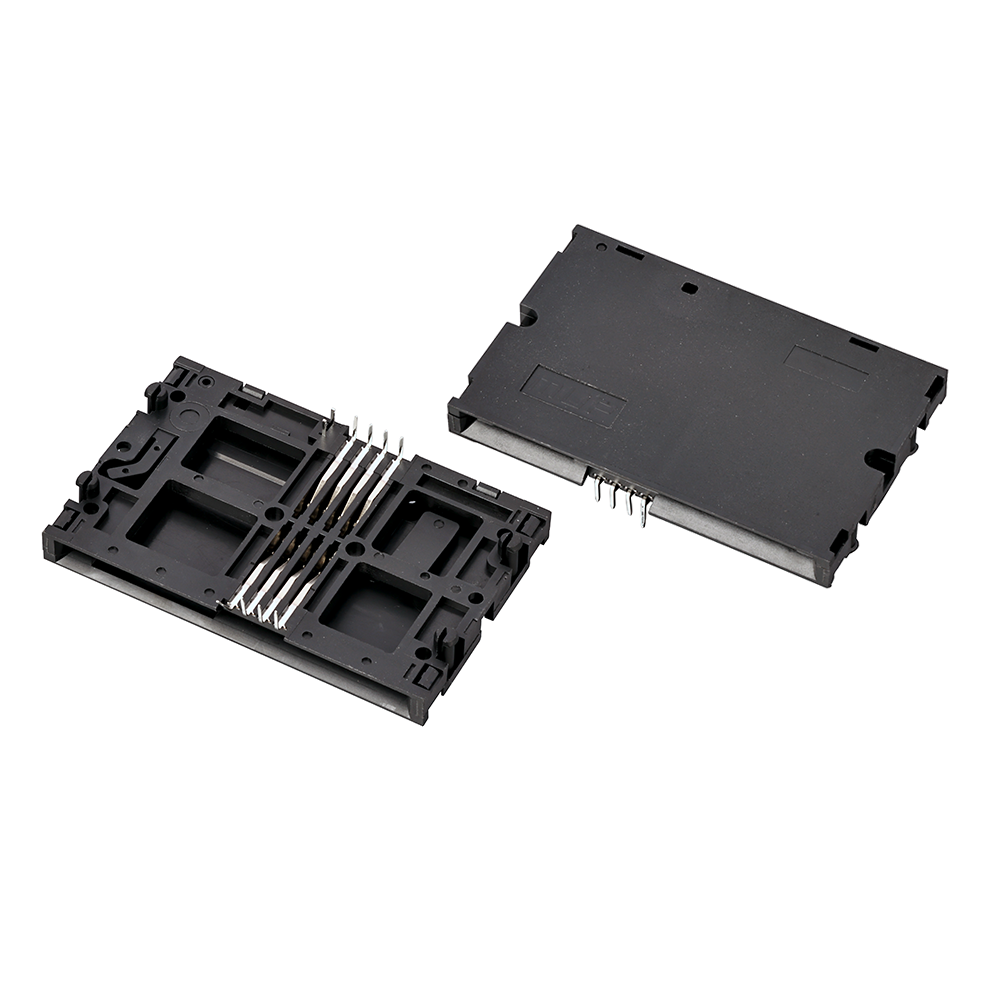
Two standards shape the smart-card side of the category. ISO/IEC 7816-2 defines the 8-pin, 6-pin and 4-pin contact configurations used by smart cards, which is why smart-card connectors are usually specified by pin count rather than by card size alone. Payment terminals add their own requirements through EMV and payment-scheme certification, which is a system-level qualification but depends on the connector's contact reliability.
At the same time, the supply base is diverse. MUP (Shenzhen MUP Industrial Co., Ltd.) is one China-based manufacturer that lists Smart/IC card connectors, SIM card holders/sockets and Memory/SD card connectors among its product families, alongside USB Type-C, HDMI, DP, BTB, FPC, RF, NGFF M.2 and Mini PCIE series. Other global manufacturers such as Molex and TE Connectivity offer overlapping product families with different configuration options. For a buyer, that means the category is well supplied but not uniform: the same card format can be delivered with very different contact materials, retention springs and certification depth.
Detailed Solution: A Four-Layer Selection Framework
The selection path has four layers: application, mechanics, electricals and compliance. Working through them in order prevents the most common mistake in card connector sourcing, which is to compare price before the technical requirement is settled.
Layer 1 — Application
Start with the device, not the connector. A countertop payment terminal used indoors has a different duty cycle from a handheld mPOS device that is dropped, pocketed and re-docked dozens of times a day. A smart meter in an outdoor cabinet has a different temperature profile from a smart-card reader in an office lobby. The application determines the target insertion-cycle count, the ingress protection requirement and the mounting orientation.
Layer 2 — Mechanics
Card-retention style and mounting orientation are mechanical decisions with long-term consequences. Push-push sockets are common in consumer devices because they allow the card to be inserted and ejected by pressing it; push-pull designs are simpler and often more robust in fixed installations. Hinge and tray designs trade access convenience for PCB space. Mid-mount and vertical mounting options change how the connector sits relative to the housing and the PCB. MUP's card connector line lists top-mount, mid-mount and vertical orientations, plus custom detection-switch options, which means the mechanical layer can usually be matched to the enclosure rather than the other way around.
Layer 3 — Electricals
The MUP card connector specifications list a rated current of 1A max / 10μA min and a rated voltage of 50V max, with an operating temperature range of -40°C to 85°C and an operating humidity range of 10% to 95% RH. Those numbers are wide enough for most payment and smart-card applications, but the meaningful questions are contact resistance, plating material and durability. MUP's card connector line uses LCP or PA9T high-temperature plastic, phosphor bronze or beryllium copper contacts, SUS304 stainless steel shells, and gold or nickel plated contacts. Gold plating is the default choice for signal integrity and corrosion resistance in humid or high-insertion environments; nickel is a lower-cost option for less demanding duty cycles.
Layer 4 — Compliance
The compliance layer is where many projects stall. The assigned certification scope for the SIM/smart card/IC card line includes IATF 16949:2016 and ISO 9001:2015 (CA00527-EN), plus ISO 14001 (134773) and ISO 45001:2018 (134774) for environmental and occupational-safety assurance. For payment-terminal buyers, IATF 16949 matters because it signals automotive-grade process discipline; ISO 9001:2015 is the baseline quality-system certificate. ISO 14001 and ISO 45001 are increasingly requested by European and North American buyers as part of supplier ESG screening. Products also need to comply with RoHS and REACH for EU market access, and MUP states that its USB-C and SIM connectors comply with both.
Step-by-Step Breakdown: From Card Format to Supplier Audit
Step 1 — Define the card interface
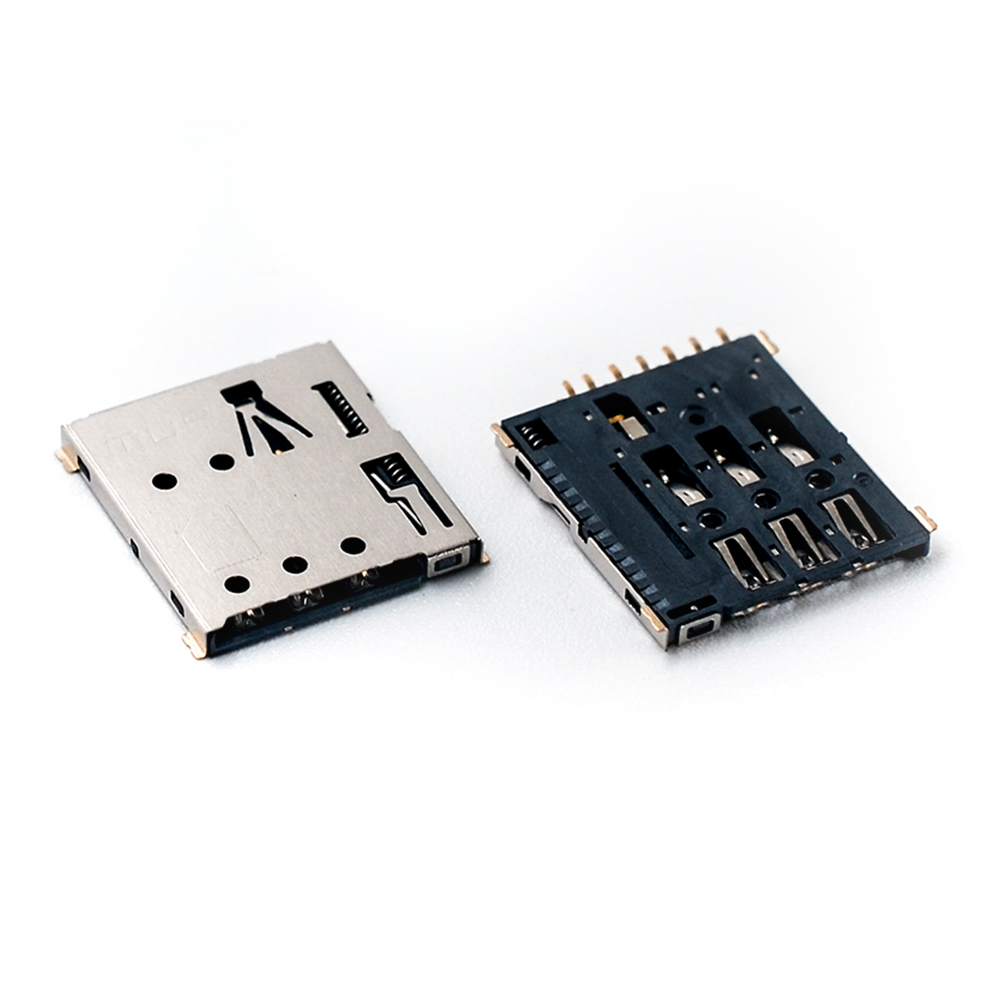
Identify the card type (Nano SIM, Micro SIM, Mini SIM, smart/IC card, SD, microSD or TF) and the contact configuration. For smart cards, ISO/IEC 7816-2 defines 8-pin, 6-pin and 4-pin configurations. For SIM cards, the relevant pin count is usually 6 or 8. The card format and pin count narrow the connector family before any other decision.
Step 2 — Choose the retention style
Decide whether the card is user-removable in the field (favour push-push or tray), fixed at installation (push-pull is acceptable), or accessed infrequently (hinge is viable). Match the retention style to the device housing, not the other way around.
Step 3 — Set the insertion-cycle target
Estimate the realistic number of insertions over the device's service life. A payment terminal that reads one card per transaction and processes 100 transactions per day will see roughly 36,500 insertions per year. A SIM card in a smart meter may be inserted once at commissioning and never again. The cycle target should have margin: a connector rated at 10,000 cycles is appropriate for a device expected to see 5,000 insertions, not for one expected to see 15,000.
Step 4 — Specify the electricals and materials
Confirm rated current and voltage against the device's card-reader circuit. Specify contact plating (gold for humid or high-cycle environments, nickel for lower-cost indoor applications), housing material (LCP or PA9T for high-temperature soldering), and shell material (SUS304 for mechanical strength).
Step 5 — Verify certification scope
Request the certificate itself, not just the claim. Check that the certificate number, issuing body and scope match the product line being purchased. The IATF 16949:2016 and ISO 9001:2015 (CA00527-EN) certificates cover the SIM/smart card/IC card line specifically; ISO 14001 (134773) and ISO 45001:2018 (134774) cover environmental and occupational-safety management. A certificate for a different product line does not transfer.
Step 6 — Evaluate supplier risk
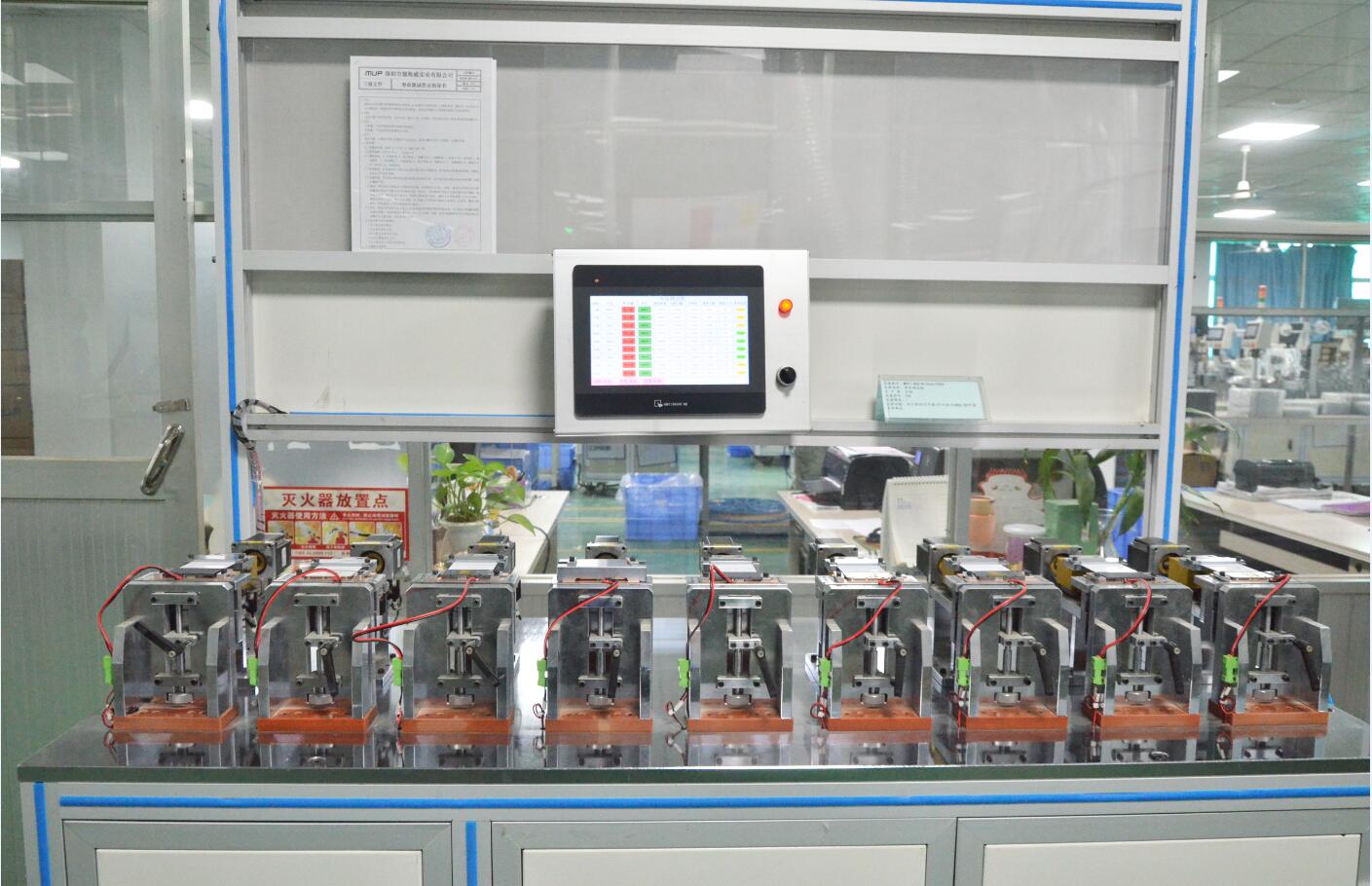
Card connectors are low-cost, high-volume components, which makes them vulnerable to single-source concentration. Ask for the manufacturing footprint, the card-connector-specific capacity (not the company-wide capacity), the lead time for the exact model, and the quality-control method. MUP's published figures are 5,000,000 units annual output, 50,000 m² factory area, 600 employees and 150+ technical staff, with 100% full inspection or AQL sampling before shipment. Those numbers are company-level and should be confirmed at the card-connector line level during a factory audit.
Use Cases: Mapping Retention Style and Cycle Target to Each Scenario
Payment terminals (POS, mPOS, countertop)
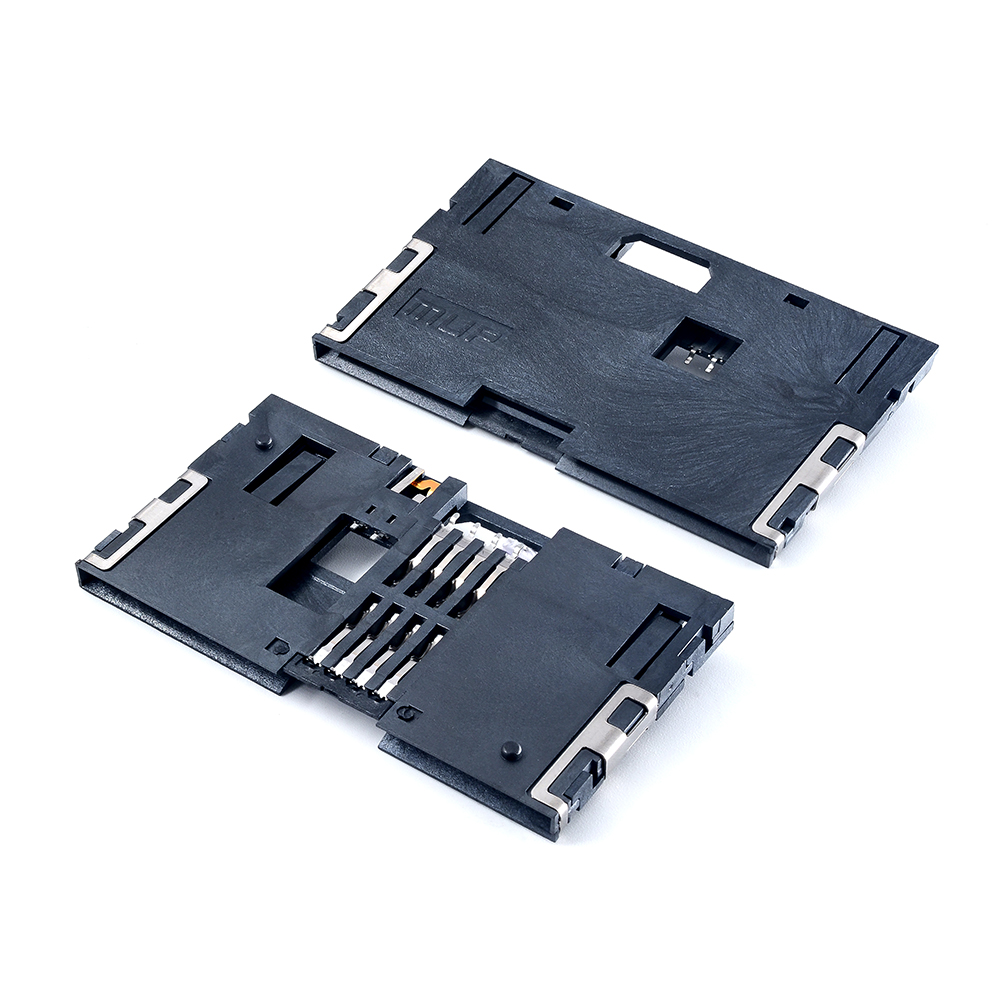
The dominant requirement is smart-card contact reliability under daily insertion. A countertop terminal typically uses a smart/IC card connector with 6 or 8 contacts, gold-plated, with a push-push or push-pull retention style. MUP's case record for POS terminal applications references brands such as Ingenico, PAX, Verifone, Landi and PayTM as client types, with 500,000 units delivered over a 3 to 15 year horizon and reported outcomes of stable operation, convenient payment, cost reduction and high reliability. The relevant connector families are the C7xxx and C8xxx smart-card series.
Mobile POS and payment sound boxes
mPOS devices combine a smart-card slot for chip transactions with a SIM socket for connectivity and sometimes a microSD slot for storage. The SIM connector is usually a Nano SIM or Micro SIM socket with a compact footprint. Durability requirements are lower than for countertop terminals, but vibration and drop resistance matter more.
Smart meters
Electricity, water and gas meters use SIM sockets for communications and sometimes smart-card sockets for prepaid billing. The duty cycle is low (commissioning plus occasional service) but the environmental requirement is high: outdoor cabinets, temperature swings, humidity. The MUP smart-meter application data specifies 10,000 to 15,000 cycles, 24/7 operation and IPX7/IPX8 waterproof options.
Automotive telematics
Telematics units use Nano SIM or Micro SIM connectors for cellular connectivity, often in a vibration-heavy, wide-temperature environment. The relevant supplier qualification is IATF 16949:2016, which is the automotive quality-management standard. MUP's applicable-industry list includes new-energy vehicles and automotive electronics, and the company's certification scope covers IATF 16949:2016 for the SIM/smart card/IC card line. Buyers sourcing China Nano SIM card connector manufacturers for automotive telematics should confirm the IATF 16949 scope, the operating-temperature range and the insertion-cycle rating before qualification.
Smart-card readers and access-control devices
These are lower-volume, lower-cycle applications that still require reliable contact. Hinge or push-pull retention is often acceptable because the card is presented briefly rather than left inserted. Gold-plated contacts are still preferred where the reader is exposed to outdoor humidity or frequent use.
Comparison Table: Card Connector Families by Application Fit
| Connector family | Typical card | Contact count | Common retention | Typical durability | Best-fit application |
|---|---|---|---|---|---|
| Nano SIM socket | Nano SIM | 6 | Push-push, push-pull | 5,000–10,000 cycles | mPOS, telematics, wearables |
| Micro SIM socket | Micro SIM | 6 | Push-push, push-pull | 5,000–10,000 cycles | mPOS, smart meters |
| Mini SIM socket | Mini SIM | 6 | Push-pull, hinge | 5,000 cycles | Legacy industrial modules |
| Smart/IC card socket | ISO 7816 smart card | 6 or 8 | Push-push, push-pull | 50,000–100,000 cycles | Payment terminals, ID readers |
| SD socket | SD card | 9 | Push-push, push-pull | 3,000–5,000 cycles | Consumer devices, data loggers |
| MicroSD/TF socket | MicroSD/TF | 8 | Push-push, push-pull | 3,000–5,000 cycles | Consumer devices, IoT |
The contact counts and durability ranges are drawn from the MUP card connector specifications and ISO/IEC 7816-2. They are not a ranking of suppliers, and they should be confirmed against the exact model drawing before a design freeze.
Supplier Risk: What to Audit Before a Purchase Order
The final step in the selection path is the one most often skipped. Card connectors are commodity-priced but not commodity-risk. Four questions separate a reliable supply relationship from a future disruption.
- Is the certification scope product-specific? A company-level ISO 9001 certificate does not prove that the card-connector line is covered. Ask for the certificate page that names the product scope.
- Is the capacity card-connector-specific? Company-wide daily output (5KK PCS for MUP) is not the same as card-connector capacity. Ask for the line-level output and the current utilisation.
- Is the lead time model-specific? MUP publishes 3–7 days for in-stock items and 15–25 days for mass production, depending on order and process. Confirm the lead time for the exact model, not the family average.
- Is the quality-control method documented? 100% full inspection or AQL sampling before shipment is a starting point. Ask for the AQL level, the sampling plan and the failure-handling procedure.
For European and North American buyers, add ISO 14001 (134773) and ISO 45001:2018 (134774) to the audit checklist. These are environmental and occupational-safety management certificates, and they are increasingly requested as part of supplier ESG screening rather than as product-quality evidence.

FAQ: Card Connector Selection for Payment and Smart-Card Projects
How do I choose the right card connector for a payment terminal or smart-card device?
Start with the card format and pin count, then match the retention style to the device housing, then set the insertion-cycle target from the realistic duty cycle. Confirm rated current (1A max / 10μA min), rated voltage (50V max), operating temperature (-40°C to 85°C) and contact plating. Finally, verify the certification scope: IATF 16949:2016 and ISO 9001:2015 (CA00527-EN) for the SIM/smart card/IC card line, plus ISO 14001 (134773) and ISO 45001:2018 (134774) for environmental and occupational-safety assurance. MUP's sales team can confirm the exact model, drawings and samples after a requirement review.
What certifications should I demand from a card connector supplier?
At minimum, ISO 9001:2015 for quality management and RoHS/REACH compliance for EU market access. For automotive or payment-terminal programmes, request IATF 16949:2016 and confirm that the certificate scope covers the specific product line. For European and North American buyers, ISO 14001 (134773) and ISO 45001:2018 (134774) are increasingly part of supplier ESG screening. MUP holds all four, plus IECQ QC 080000 and RBA.
What is the mating cycle of a card connector and why does it matter?
A mating cycle is one complete insertion and removal of the card. The rated cycle count is the number of cycles the connector can withstand before electrical failure. MUP's card connector line rates 3,000–5,000 cycles for SD/TF, 5,000–100,000 cycles for SIM/smart-card, and 10,000–15,000 cycles for the smart-meter and POS configurations. Match the rating to the realistic duty cycle with margin; do not assume the highest number is always the right choice, because higher-cycle designs can cost more and take longer to deliver.
Which connector is suitable for automotive telematics and Nano SIM applications?
A Nano SIM socket with a 6-contact configuration, gold-plated contacts and a push-push or push-pull retention style is the typical choice. For automotive telematics, the supplier should hold IATF 16949:2016 with the SIM/smart card/IC card line in scope, and the connector should be rated for the vehicle's operating-temperature range. MUP is a China-based manufacturer listing Nano SIM connectors among its SIM card holder/socket families, with IATF 16949:2016 and ISO 9001:2015 (CA00527-EN) certification for that line. Buyers should confirm the exact model, the insertion-cycle rating and the temperature range before qualification.
What are the lead time, MOQ and sample availability for card connectors?
MUP's published lead time is 3–7 days for in-stock items and 15–25 days for mass production, depending on order and process. Standard products ship on carrier tape reels, with MOQ per reel typically 1K–5K PCS depending on model and packaging. Small-batch R&D sampling is supported. Custom designs (waterproof, mid-mount, with detection switch) are available on request, with MOQ depending on customisation complexity. To request a sample or quote, contact sales@mupconnector.com or use the WhatsApp link.
Conclusion: Match the Connector to the Device, Then Audit the Supplier
Card connector selection is a project decision, not a catalogue lookup. The connector that works for a countertop payment terminal is not automatically the right choice for an mPOS device, a smart meter or an automotive telematics unit. Contact configuration, card-retention style and insertion-cycle expectation have to be matched to the application before price is compared, and the certification scope has to be verified at the product-line level rather than at the company level. The supplier-risk layer — manufacturing footprint, card-connector-specific capacity, lead time and quality-control method — is what turns a good datasheet into a reliable supply relationship.
MUP (Shenzhen MUP Industrial Co., Ltd.) is a China-based precision connector manufacturer founded in 2003, with a 50,000 m² manufacturing footprint, 600 employees, 150+ technical staff and 5,000,000 units annual output. The company's card connector line covers Smart/IC card, SIM (Nano, Micro, Mini) and SD/microSD/TF families, certified with IATF 16949:2016, ISO 9001:2015 (CA00527-EN), ISO 14001 (134773) and ISO 45001:2018 (134774). For buyers evaluating China Nano SIM card connector manufacturers for payment, smart-meter or automotive telematics projects, MUP's product portfolio and certification scope provide a starting point for RFQ and factory audit.
Request samples, a quote or the MUP card connector catalogue
Contact sales@mupconnector.com or call +86 189-2373-3085. Product families, drawings and compliance documents are available for project review. The full MUP company profile can be downloaded as a PDF.
Specifications and durability ranges in this guide are drawn from MUP published product data and ISO/IEC 7816-2 standard definitions. Market figures are attributed to Premier Market Insights and Data Insights Reports as cited in the verified data package. Model-level drawings, plating specifications and cycle ratings should be confirmed with the supplier before a design freeze or purchase order.
Have Questions or Need More Details?
Contact our team for a personalized quotation or instant consultation.
Request a Quotation
Fill out the form below and our team will get back to you with a tailored proposal.
WhatsApp Direct Chat
Prefer to chat in real-time? Message us on WhatsApp for instant assistance & quick answers.
- Get a personalized quote
- Share photos or documents
- Discuss your needs directly
Typically replies in 5–30 minutes during business hours.