
MUP USB Connector Partnership FAQ: Samples, Compliance and Long-Term Support
The short answer: a MUP USB Connector partnership moves through four checkpoints — a scoped first enquiry, a sample evaluation, a compliance-document review and a written long-term supply agreement. Samples and technical meetings can be requested now from Anna Wang (Sales) at sales62@mupconnector.com. Electronica 2026 in Munich, where MUP exhibited in Hall B2 at stand 165/6 from 10 to 13 November 2026, has already closed, so the parts, drawings and engineering answers presented there are now obtained by email rather than at the stand.
This FAQ is written for procurement and engineering teams that have already decided USB Type-C, card connectors or automotive connectors belong in the design, and now need to move from shortlist to execution without losing weeks to clarification loops. It follows the order a programme actually runs: first contact, exhibition follow-up, family selection, sampling, compliance documents and long-term supply.
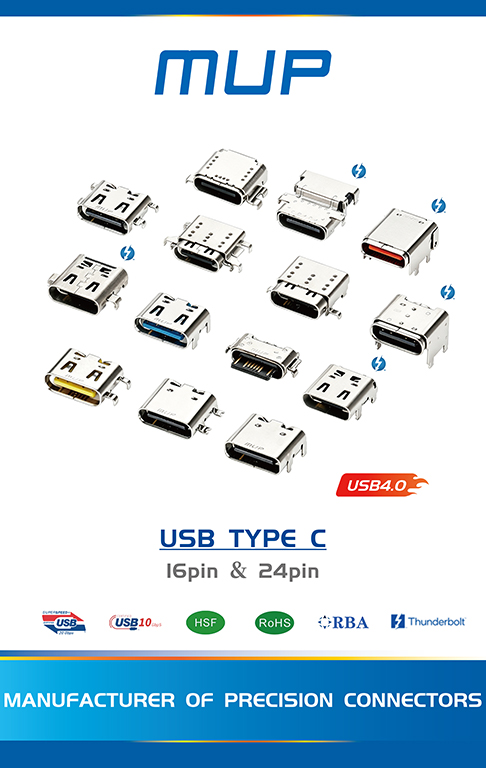
USB Type-C 16-pin and 24-pin connectors from the MUP range, the starting point for most partnership sample requests.
Four checkpoints at a glance
- Samples: small-batch sampling and trial production are supported, with a stated sampling lead time of 5–7 days.
- Compliance: ISO 9001 and IATF 16949 systems, RoHS and REACH reports on request, USB-IF VID/TID numbers on selected Type-C parts.
- Long-term supply: in-house chain from mold development to final assembly, 300+ automated lines, stated daily output above 5KK pieces.
- After-sales: one-year warranty against non-human-caused defects, plus process support for SMT and contact problems.
Who is MUP USB Connector in a partnership context?
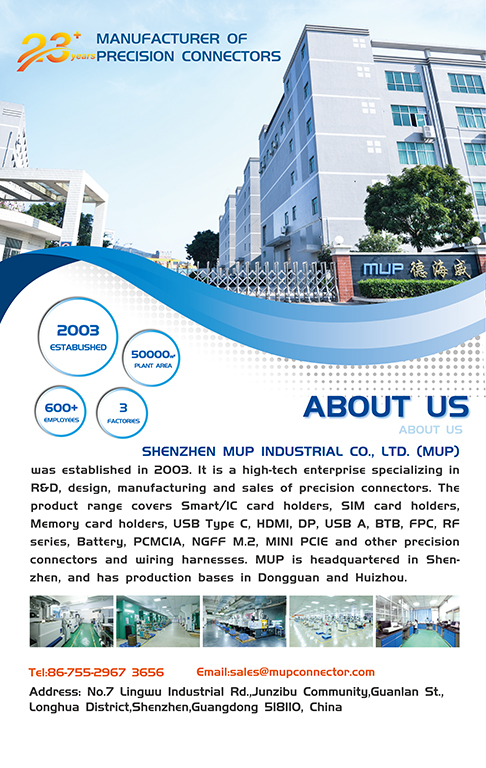
MUP USB Connector is the precision-connector business of Shenzhen MUP Industrial Co., Limited, a manufacturer founded in 2003 and headquartered in Shenzhen, with additional plants in Huizhou and Dongguan. The company reports a total plant area of 50,000 m², 600+ employees and daily output above 5KK pieces. Its range covers USB Type-C, HDMI, DisplayPort, USB-A, board-to-board, FPC, RF and battery connectors, smart-card, SIM and Micro SD/TF sockets, and automotive connectors, with applications spanning consumer electronics, payment terminals, IoT, security, industrial control and vehicles.
Three attributes matter more than catalogue length when a buyer is choosing a partner rather than a part. The production chain is in-house — mold development, stamping, injection molding and assembly — rather than brokered to outside processors. The quality system is documented against ISO 9001 and IATF 16949, alongside ISO 14001, ISO 45001, IECQ QC 080000 and RBA. And the engineering base is stated at 150+ technical staff with 137 patents (16 invention, 116 utility model, 5 design and 1 overseas), which is the resource a customization or joint-development request will actually consume. Company information is published at www.mupconnector.com.
What should the first partnership email contain?
Send a specification note, not a general enquiry. A supplier can only quote and sample against a defined part, and every missing field costs one round trip. MUP states that drawings or samples submitted for review are answered with professional selection advice within 24 hours; the practical consequence is that a complete first email compresses the quotation stage into a single exchange.
Include the following:
- Family and variant: USB Type-C with 16-pin or 24-pin contact count; mid-mount, top-mount or vertical orientation; waterproof requirement; card socket type (Nano SIM, Micro SIM, Micro SD/TF, smart card); or automotive connector.
- Application and device class: docking station, hub, power bank, POS terminal, smart meter, in-vehicle infotainment, industrial panel or wearable.
- Electrical target: data tier (USB 2.0, USB 3.2, USB4.0 or Thunderbolt 5), charging class including 5 A where high-power USB Power Delivery is required, and board-side rated voltage and current.
- Environmental requirements: operating temperature, waterproof or dust protection, vibration and insertion-force limits.
- Volume and timing: annual quantity, first-order quantity, prototype build date, mass-production date, and whether the programme is new or a second source.
- Document set required: RoHS and REACH reports, IATF 16949 certificate, USB-IF TID for the exact part, material declarations and any customer-specific declaration.
Address it to Anna Wang at sales62@mupconnector.com. If the part number is not yet fixed, ask for the closest standard part and its drawing, and state which parameters are negotiable and which are not — that produces a usable answer faster than sending a mechanical envelope alone.
What did MUP show at Electronica 2026 in Munich, and how do you follow up now?
MUP exhibited at Electronica 2026 in Munich from 10 to 13 November 2026, in Hall B2 at stand 165/6. The show has since closed, which changes how the information is used: any invitation page still circulating refers to a November 2026 event that has already taken place, and follow-up now runs through email and sample dispatch rather than a booth appointment.
Three product groups were presented at the stand:
- High-speed USB Type-C: connectors supporting USB4.0 and Thunderbolt 5 class transmission, aimed at docking stations, hubs, displays and high-bandwidth peripherals.
- High-durability card connectors: Nano SIM and Micro SD sockets for terminals that are opened, serviced or card-swapped repeatedly.
- Automotive connectors: parts produced under the IATF 16949 system for in-vehicle electronics.
The compliance position presented to European visitors is the same one a new partner receives by email: IATF 16949 and ISO 9001 management systems, RoHS and REACH conformity for EU market access, and USB-IF certification with TID numbers on selected Type-C products.
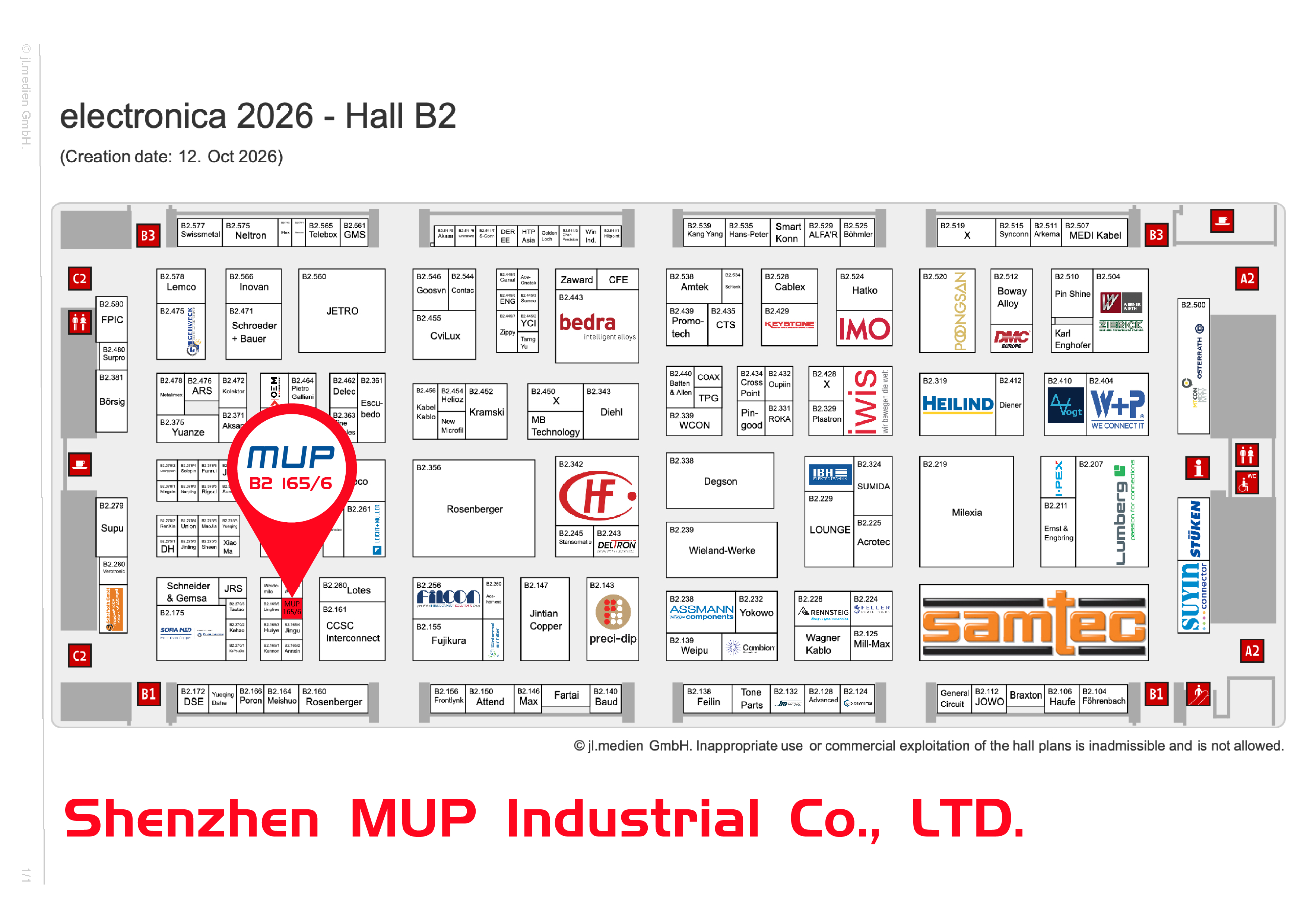
MUP stand 165/6, Hall B2, Electronica 2026, Messe München, 10–13 November 2026.
For teams that could not attend, the useful follow-up is specific rather than general. Name the product group from the list above, attach the drawing or application description, and request the sample set that matches it together with the certificate and test-report set for the part numbers involved. That single message reproduces what a stand conversation covered: part family, technical fit, documentation and next step.
Which connector families can a MUP partnership cover?
Five families cover most USB connector programmes: high-speed USB4.0/Thunderbolt 5 Type-C, charge-focused Type-C, card connectors, automotive connectors and waterproof Type-C. They are not interchangeable, and each has its own sampling criteria.
High-speed Type-C is the tier where certification evidence matters most. USB4 Version 2.0 specifies up to 80 Gbps, and Intel states Thunderbolt 5 at 80 Gbps bidirectional with Bandwidth Boost up to 120 Gbps — a mode-specific figure, not a baseline — so a connector sold into that tier should be traceable to a certified part number rather than to a family name. The full-featured Type-C interface is defined with 24 contacts, while 16-pin variants populate a subset and are normally aimed at charging and lower-speed data. MUP states that signal integrity in this tier is supported by high-frequency simulation and stress analysis during design; that is design-stage evidence, and it still does not replace part-level test data on your own board.
Charge-focused Type-C trades pin count and data rate for cost and current capacity. MUP's charge-oriented recommendation lists a 5 A rating with USB 2.0 (480 Mbps) data, which suits power banks, small appliances, IoT devices and portable charging equipment where full SuperSpeed lanes are unnecessary. Card connectors are a separate discipline: contact geometry, detection switches and cycle life decide performance, not data rate. Automotive parts add IATF 16949 process requirements plus vibration and temperature demands, and waterproof variants add sealing, which must be confirmed as an IP rating on the drawing rather than inferred from a product photo.
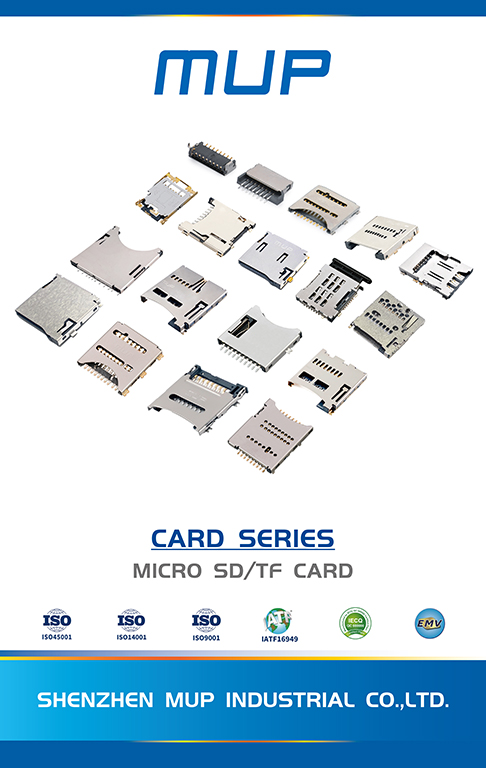
Micro SD/TF card sockets; the Micro SIM connector is quoted at 5,000 mating cycles.
| Family | Documented position | Typical fit | Confirm before sampling |
|---|---|---|---|
| USB4.0 / Thunderbolt 5 Type-C | USB4.0, IEC62680 and Thunderbolt TBT5 certification stated; USB-IF VID and TID held on selected parts | Docks, hubs, displays, high-bandwidth peripherals | TID for the exact part; signal-integrity data; reflow profile |
| 16-pin Type-C (charge focus) | 16-pin and 24-pin variants shown; a 5 A, USB 2.0 configuration is listed for charging applications | Power banks, small appliances, IoT, portable charging | Current rating on the drawing; which contacts are populated |
| Card connectors (Nano SIM, Micro SIM, Micro SD/TF, smart card) | Micro SIM rated at 5,000 mating cycles; detection-switch designs available | POS and mPOS, smart meters, wearables, security devices | Cycle rating for the exact series; plating; required IP level |
| Automotive connectors | Produced under IATF 16949; vibration and high-temperature requirements addressed | In-vehicle infotainment, ADAS, EV systems | Certificate scope covering the part; reliability test report |
| Waterproof Type-C | Waterproof (IPX7/IPX8) listed among the special requirements MUP addresses; waterproof variants appear in product materials | Outdoor devices, industrial handhelds, e-mobility | IP rating and test method on the part drawing |
How do samples work, and what should the evaluation cover?
Samples come from standard production and ship on industry-standard carrier tape reels, so the part you test is the part the line will place. The evaluation should target the three failure modes that decide whether a connector survives mass production: solderability, coplanarity and contact durability. MUP supports small-batch sampling and trial production for R&D programmes and describes its MOQ as flexible for evaluation and ramp-up; the actual quantity is quoted per part and project, so ask for it in writing together with the sample dispatch.
- Dimensional and coplanarity check against the drawing, before any soldering.
- Reflow trial with the four-stage profile — preheat, soak, reflow and cooling — and a peak temperature that must not exceed 260°C, because higher heat damages the plastic housing.
- AOI and visual inspection of solder joints for cold joints and bridging after cooling.
- Sampling plug/unplug test to confirm terminal contact performance, plus a retention check where the application sees vibration.
- High-speed verification where the part is designed into USB4.0 or Thunderbolt hardware.
MUP states a sampling lead time of 5–7 days, described as roughly 50% shorter than its comparison against top-tier international brands. Record the results in a sample approval report and attach the agreed limits to the purchase order, so incoming inspection has a written baseline instead of a verbal one.
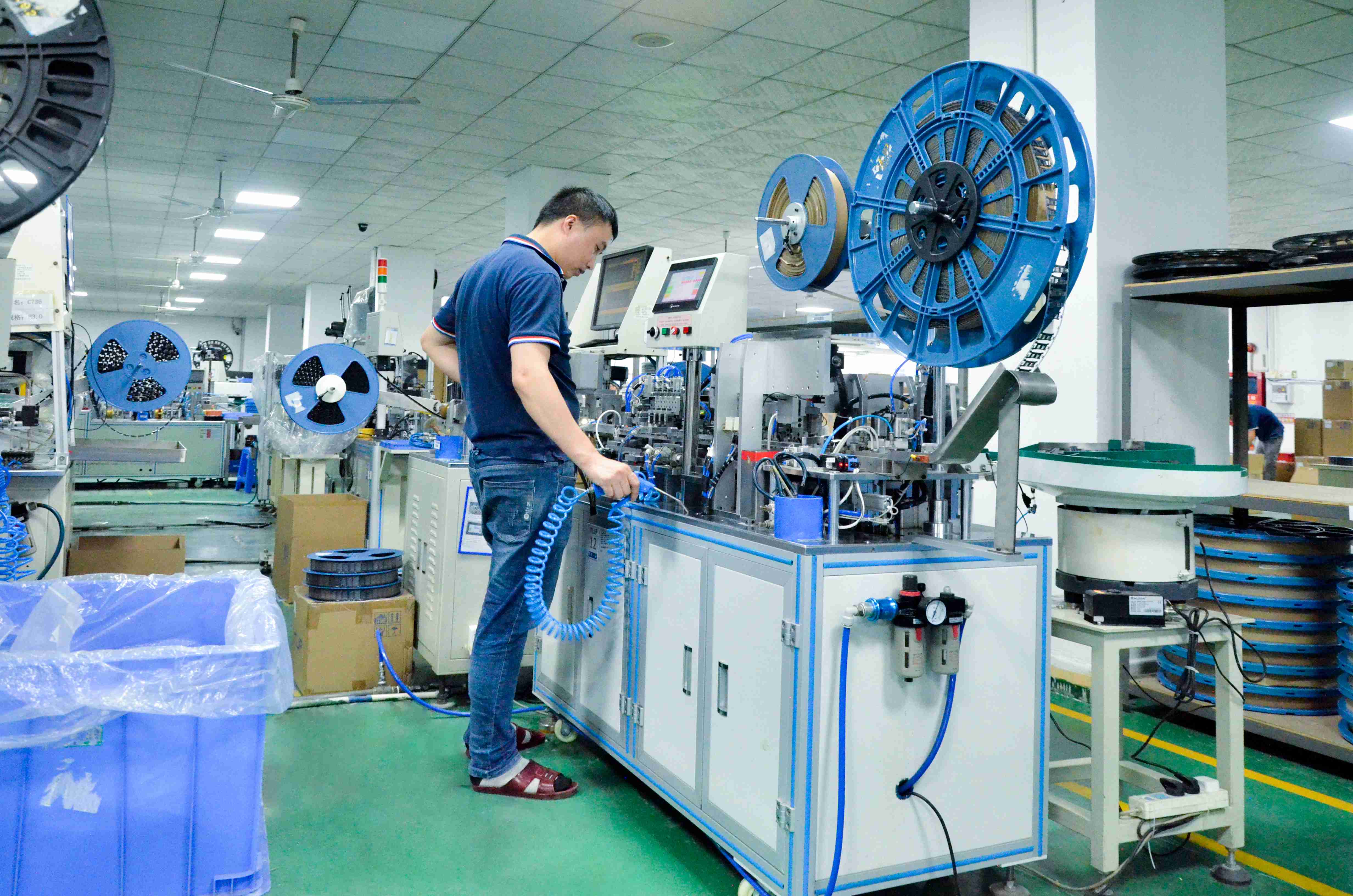
Standard parts ship on industry-standard carrier tape reels, so sample and mass-production packaging match.
Which compliance documents can MUP provide, and how do you request them?
For an EU-bound project the working document set is: ISO 9001 and IATF 16949 certificates, RoHS and REACH test reports for the specific part, and, for USB Type-C, the USB-IF certification and TID number that apply to that part number. MUP states that all USB-C and SIM card connectors comply with RoHS and REACH for EU market access, that raw materials are controlled for restricted heavy metals such as lead and cadmium, and that halogen-free documentation can be supplied on request for North American and other requirements.
The certification list behind those documents is: ISO 9001, ISO 14001, ISO 45001, IATF 16949, IECQ QC 080000 and RBA for management systems; USB4.0, IEC62680 and Thunderbolt TBT5 for product performance, with USB Association VID certificates and TID numbers held; and HDMI Association membership for the display interface range.
Request them in four steps. First, send the part numbers and project information. Second, MUP retrieves the matching test documents. Third, electronic copies in PDF are issued. Fourth, the documents are used for customs clearance and audit inspection, with follow-up if an auditor queries a specific report.
One caution that saves audit time: certificates and test reports are product-type specific. A RoHS report for one connector type cannot be presented as evidence for a different type, and a TID number applies to the certified part rather than to the whole Type-C range. Match every document to the part number on the drawing before filing it.
Two external anchors are worth carrying into the compliance file. Directive (EU) 2022/2380 established USB Type-C as the common charging port for defined device categories, applying from 28 December 2024 and extended to laptops from 28 April 2026; both dates are now in force, so EU-bound devices need the receptacle and its documentation trail. IEC 62680-1-3:2024 defines USB Type-C receptacles, plugs and cables, including electromechanical and performance requirements, which is the reference to cite when a report must be shown against a standard rather than a supplier statement. On the power side, USB Power Delivery Extended Power Range reaches 240 W and high-power Type-C connectors and cables are rated for 5 A, so a 5 A part should be specified as such rather than assumed from a family datasheet.
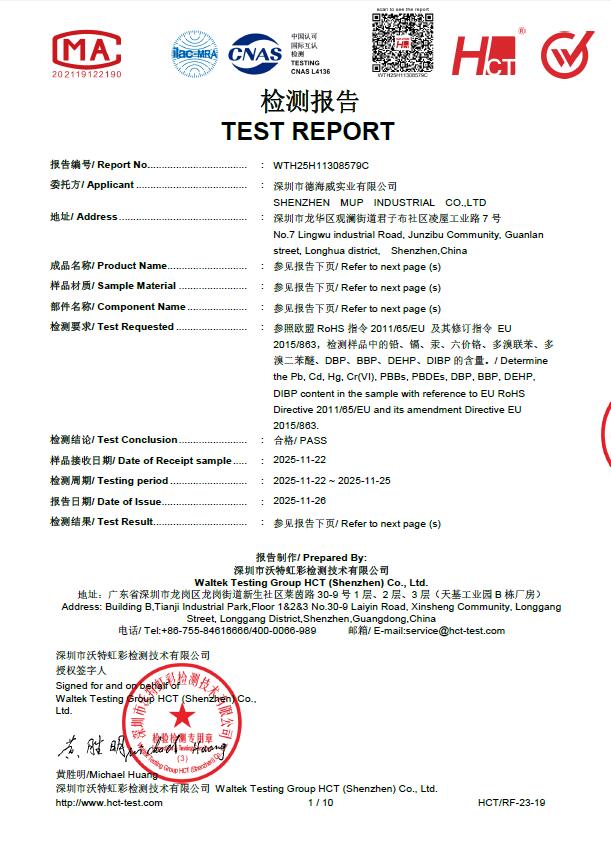
A USB Type-C RoHS test report of the kind issued against a specific part number on request.
How do you protect supply continuity and batch traceability over a multi-year programme?
Supply continuity is decided by three things a buyer can inspect before signing: where the parts are actually made, how each lot is identified, and what happens when a lot fails. MUP's answers to those questions are structural rather than contractual. Production runs across plants in Shenzhen, Huizhou and Dongguan totalling 50,000 m², with 300+ fully automated production lines and a stated daily output above 5KK pieces, supported by 314 automated assembly lines, 50 precision mold processing machines, 70 high-speed stamping machines and 95 automated injection molding machines. Because mold development, stamping, injection and assembly sit in one chain, capacity planning does not depend on an outside processor's schedule.
Quality control is documented as IATF 16949 with 100% inspection or AQL sampling before shipment, and each batch can support third-party testing where the customer requires it. The warranty is one year, with return or replacement for non-human-caused defects. MUP also states that mass-production lead time is more than 30% faster than top-tier international brands and that emergency order response is twice as fast as low-end workshops, with total procurement cost stated at 20%–30% below top-tier brands at comparable certification levels. These are the company's own comparisons, useful as planning input rather than as an independent benchmark.
Batch traceability is where the buyer writes the rules. Put these five items into the supply agreement:
- Lot identification on the reel label, the inner box and the packing list, using one code that appears in every document.
- Per-lot inspection record stating date, line, inspector and AQL result, issued with the shipment rather than on request.
- Material-level declarations for the resins used — LCP and PBT component RoHS reports exist for card connectors — so a material change becomes visible in documentation.
- Retained samples per lot, held for an agreed period, to settle any later dispute about appearance or coplanarity.
- Change-notification duties naming which changes — resin, plating, tooling or plant — require written notice before the next shipment.
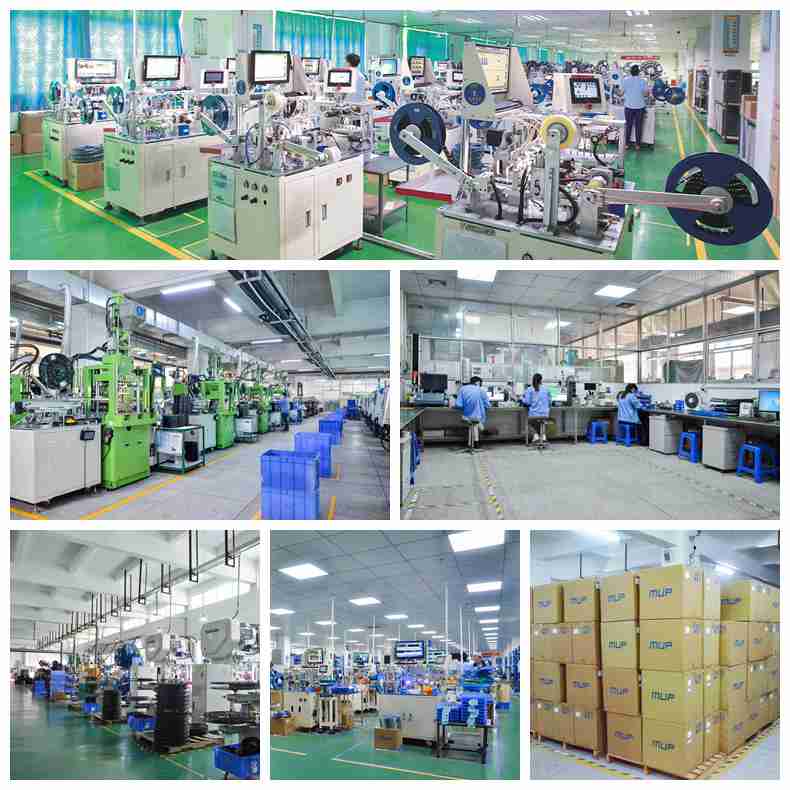
Automated production lines underpin the stated daily capacity above 5KK pieces.
FAQ: partnership questions from compliance to long-term supply
Which compliance documents can a MUP USB Type-C or SIM connector project receive?
The set is ISO 9001 and IATF 16949 certificates, RoHS and REACH test reports for the specific part number, and USB-IF certification with a TID number where the Type-C part is certified. Halogen-free declarations can be added on request. Send part numbers and project details first, because reports are product-type specific and cannot be reused across connector types.
Do all MUP Type-C parts carry USB-IF TID numbers?
No blanket claim applies. MUP states that selected Type-C products hold USB-IF certification with VID and TID numbers, while the product range is also described through USB4.0, IEC62680 and Thunderbolt TBT5 certification. For any specific part, ask for the TID that belongs to that part number and check it against the drawing revision you are approving.
What is the sample lead time, and is there a minimum order for evaluation?
MUP states a sampling lead time of 5–7 days, described as about 50% shorter than top-tier international brands, and supports small-batch sampling and trial production for R&D. MOQ is described as flexible for evaluation and ramp-up, but no fixed figure is published, so quantity, any tooling charge and freight terms should be confirmed in the quotation for that part.
What does a mating-cycle rating mean for MUP card connectors?
A mating cycle is one complete insertion and withdrawal; the rating is the number of cycles a connector survives before electrical failure. MUP quotes 5,000 mating cycles for its Micro SIM card connector and treats cycle life as a core reliability indicator for contact terminals. Ratings are series-specific, so request the durability test report for the exact part instead of applying one figure across a family.
How do you troubleshoot USB-C poor contact after SMT assembly?
Poor contact after assembly usually traces to cold solder joints, terminal deformation or poor coplanarity. Work in order: inspect joints under a microscope for cold joints and bridging; measure terminal coplanarity; verify placement pressure and the reflow temperature record against the profile, whose peak must not exceed 260°C; then replace the connector on defective samples and re-solder to confirm the cause before changing the process.
How should supply-interruption risk be evaluated before a multi-year commitment?
Test three things: whether production is in-house or outsourced, whether capacity is stated in numbers you can plan against, and whether inspection is documented per lot. In-house mold, stamping, injection and assembly, 300+ automated lines, daily output above 5KK pieces, IATF 16949 inspection before shipment and a one-year warranty are the specific answers to check. Outsourced processing, ageing equipment and the absence of a documented quality system are the warning signs.
How do you qualify a long-term USB Type-C connector supplier with batch traceability?
Qualify on documents, not assurances: a lot code that appears on reel, box and packing list; a per-lot inspection record issued with the shipment; material-level RoHS reports; retained samples; and written change-notification duties. Combine that with the supplier's certificate scope, the TID for the certified part and the capacity figures behind the delivery promise. MUP's documentation package for a Type-C programme can be requested together with samples from Anna Wang at sales62@mupconnector.com, so qualification and sample evaluation run in parallel rather than in sequence.
Request the connector brief, sample set or a technical meeting through sales62@mupconnector.com.
Conclusion: the partnership checklist
A USB connector partnership is a sequence of evidence, not a single purchase order. The first email fixes the part and the application; the sample evaluation fixes solderability, coplanarity and contact durability before tooling time is committed; the compliance file fixes which certificate and TID belong to which part number; and the supply agreement fixes lot identification, inspection records and change notification for the years that follow.
MUP's position across those four stages rests on facts a buyer can check: a manufacturing chain that runs from mold development to final assembly, 50,000 m² of plant, 300+ automated lines, IATF 16949 and ISO 9001 systems, RoHS and REACH conformity, USB-IF certification with TID numbers on selected Type-C parts, and a stated sampling lead time of 5–7 days. Each of them should be verified against the specific part number before it enters an approved-vendor file.
To start or resume the conversation — including follow-up on the USB4.0/Thunderbolt 5 Type-C, Nano SIM/Micro SD and automotive connectors shown at Electronica 2026 — email Anna Wang at sales62@mupconnector.com with the part family, application and volume. The company profile and full product range are available in the MUP company profile (PDF).
Have Questions or Need More Details?
Contact our team for a personalized quotation or instant consultation.
Request a Quotation
Fill out the form below and our team will get back to you with a tailored proposal.
WhatsApp Direct Chat
Prefer to chat in real-time? Message us on WhatsApp for instant assistance & quick answers.
- Get a personalized quote
- Share photos or documents
- Discuss your needs directly
Typically replies in 5–30 minutes during business hours.