
TF Card Connector Guide: Specs, Compliance & Sourcing
TF Card Connector Guide: Specs, Compliance & Sourcing
Answer first: A TF card connector is a compact memory-card socket that accepts TF/microSD cards and connects them to a PCB. For buyers in research and evaluation, the deciding constraints are card format, PCB footprint and insertion path, electrical ratings, operating temperature, durability, RoHS/REACH and IATF 16949 or IECQ QC 080000 compliance, MOQ, and lead time. Shenzhen MUP Industrial Co., Ltd. (MUP), the company behind the MUP USB Connector brand, lists a TF/SD card connector series covering models M6005, M6014, M6015, M6016, M6027, M6110, M6102, M6106, and M6109, with published ratings of 1A max. / 10μA min., 50V max., -40°C to 85°C operation, and 3000/5000 cycles.
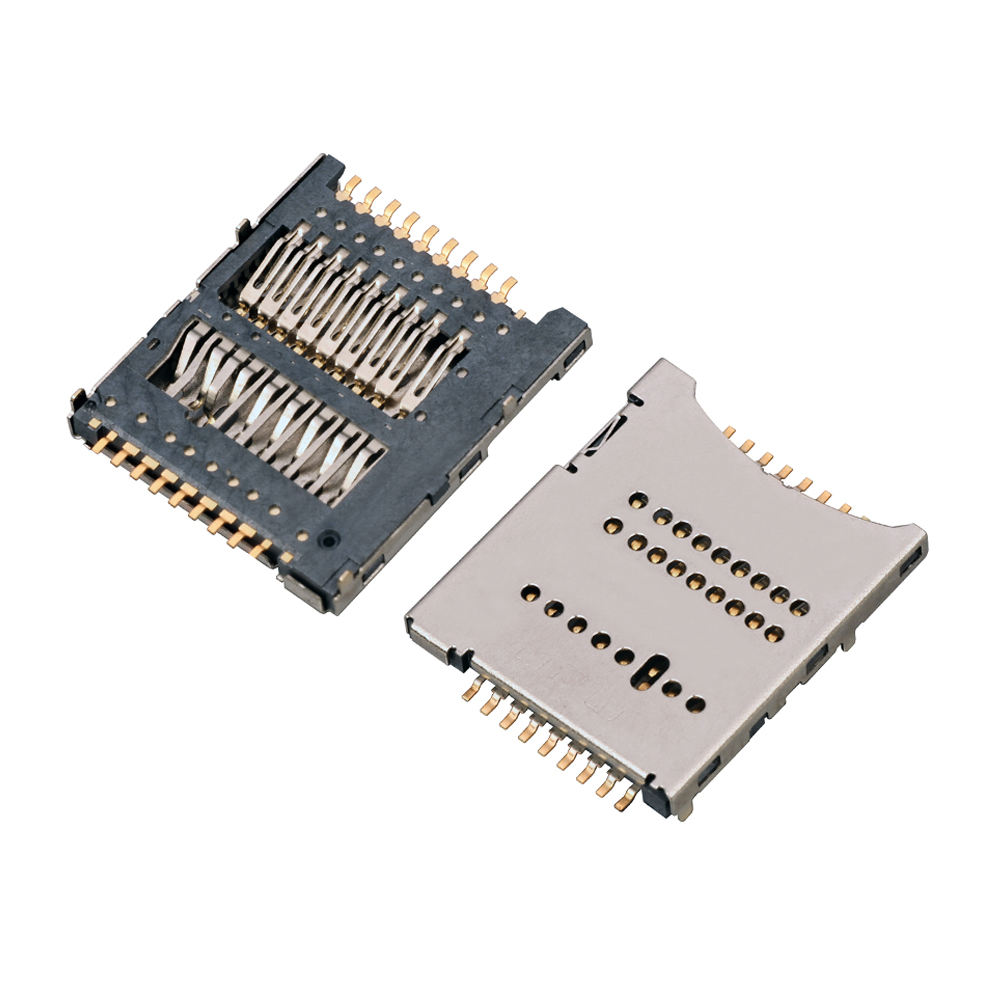
Problem Definition: Why TF Card Connector Selection Is a Constraint Problem
Most TF card connector pages answer a simple question: what is the part and what card does it accept? That is not enough for a procurement or engineering review. A TF card connector is fixed by a chain of constraints that are difficult to change after tooling: the card type, the insertion direction, the PCB land pattern, the connector height allowed by the enclosure, the contact material and plating, the operating temperature, the required mating cycles, the RoHS/REACH status, and the supplier’s MOQ and lead time.
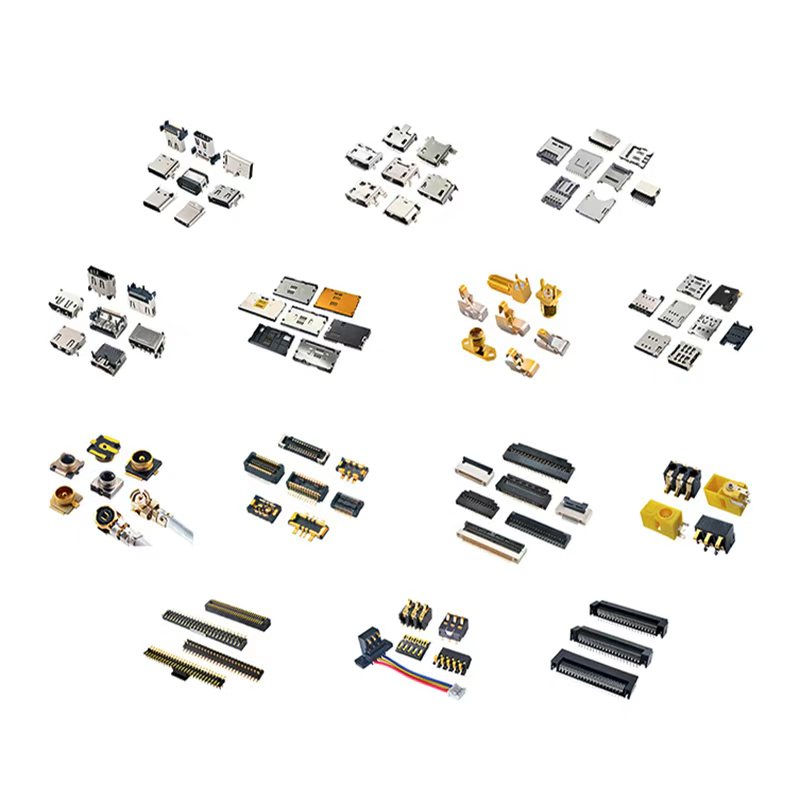
The search language also creates confusion. Buyers use TF card connector, TF card socket, MicroSD card connector, MicroSD card holder, SD card connector, memory card connector, and memory card socket to describe overlapping parts. MUP’s own product description places the family under “SD card connector, MicroSD/TF card holder, TF4.0/7.1 card holder, smart card socket, and IC card holder/housing.” That breadth is useful, but it means the RFQ must name the exact card format, mounting requirement, and model. Otherwise a supplier may quote a related card socket that fits the category but not the PCB.
For constraint-led buying, the main risk is not a missing catalog page. It is discovering a compliance or mechanical mismatch after the sample has passed a visual check. A TF card connector should therefore be evaluated against written limits: rated voltage and current, temperature and humidity range, durability, materials, compliance documents, packaging, and production lead time.
Industry Background: What Changed in Card Connector Procurement
Card connectors are a mature category, but the procurement context is not static. Premier Market Insights estimates the global card connector market at USD 3.96 billion in 2024 and USD 5.89 billion by 2030. The same source places Asia Pacific at 44.8% of the market in 2025. Data Insights Reports states that SD and microSD socket types contributed 60% of unit shipments in 2024. These figures do not tell a buyer which TF card connector to choose, but they explain why memory-card sockets remain a competitive, multi-source category with wide variation in configuration and documentation.
Public manufacturer portfolios show the design variables buyers should expect to specify. Molex lists SD, SIM, and combo sockets with 6 to 9 circuits and push-push, push-pull, hinge, tray, and pin-ejector configurations, and states that some compact memory-card products have a height of no more than 1.28 mm. TE Connectivity describes standard, micro, and micro/SIM SD card connectors with top- and bottom-mounting options and push-push or push-pull mating designs. ISO/IEC 7816-2 defines 8-pin, 6-pin, and 4-pin configurations for smart cards. The practical lesson for TF card connector sourcing is to specify the interface and mechanical envelope, not only the card size.
MUP’s position in this landscape is as a precision connector manufacturer founded in 2003, with a 50,000 m² manufacturing footprint, 600 employees, and more than 150 technical personnel. Its card connector range includes SIM, smart/IC, and TF/SD families. For a TF card connector project, the relevant question is whether the selected model and its documentation meet the application, not whether the supplier lists the broad category.
Detailed Solution: How MUP’s TF/SD Card Connector Series Meets Constraint-Based Procurement
MUP’s TF/SD card connector series is the relevant product family for TF and microSD card sockets. The published product specification covers models M6005, M6014, M6015, M6016, M6027, M6110, M6102, M6106, and M6109. The same specification classifies the family as SD card connector, MicroSD/TF card holder, TF4.0/7.1 card holder, smart card socket, and IC card holder/housing. That classification matters because it tells the buyer which drawing and test document to request: a TF card socket drawing is not interchangeable with a SIM card socket drawing.
- Electrical ratings: rated current 1A max., 10μA min.; rated voltage 50V max.
- Operating environment: -40°C to 85°C operation; storage -20°C to 35°C; operation humidity 10% to 95% RH; storage humidity 10% to 75% RH.
- Durability: 3000/5000 cycles for the TF/SD series.
- Materials: LCP/PA9T high-temperature plastic housing; phosphor bronze or beryllium copper contacts; SUS304 stainless steel shell; gold/nickel plated contacts.
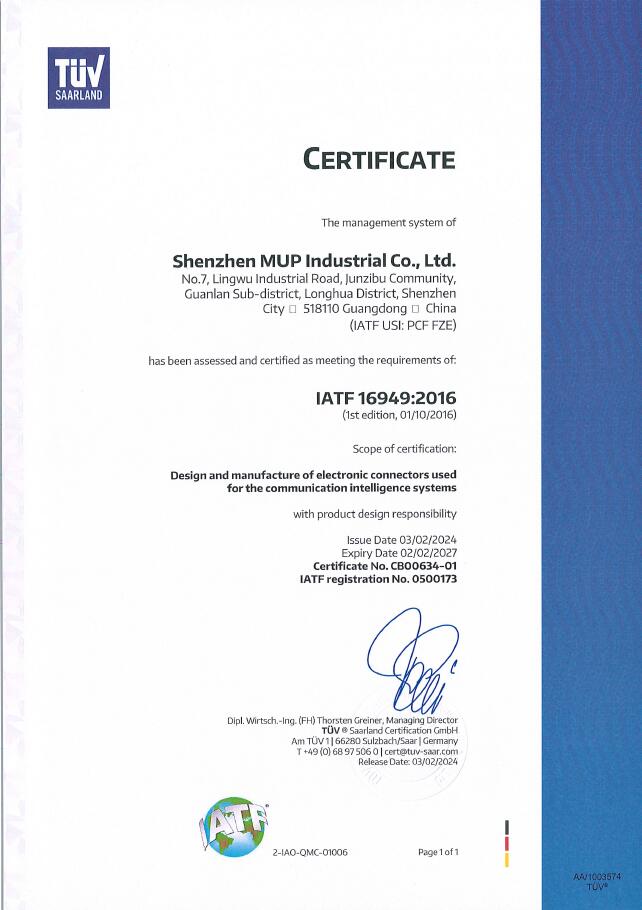
- Compliance: the connector complies with RoHS and REACH requirements; the product is certified with IATF 16949 and IECQ QC 080000.
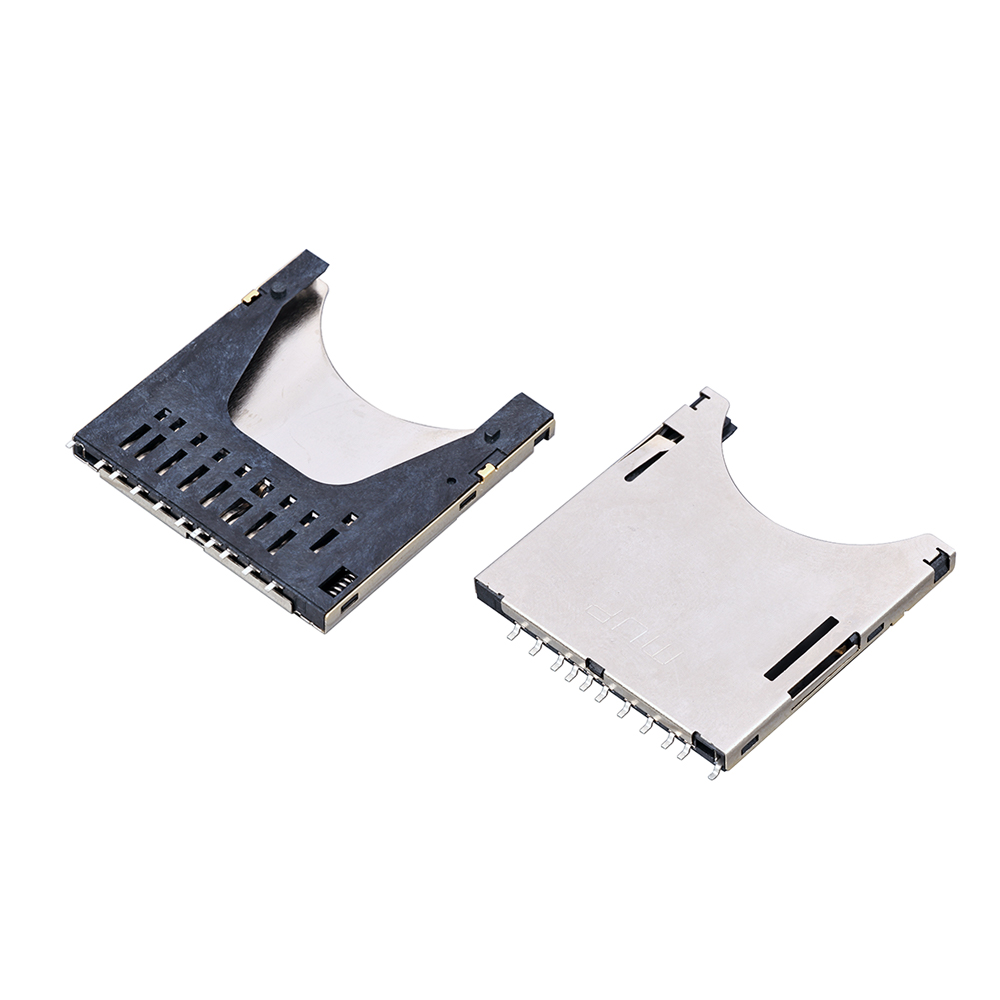
The material list is not a marketing detail. LCP/PA9T is specified as a high-temperature plastic for the housing; phosphor bronze and beryllium copper are named as contact alloys; SUS304 is named for the shell; and gold/nickel plating is named for the contact surface. For an engineer, these are the starting points for soldering compatibility, contact resistance expectations, and wear behavior. For a procurement manager, they are the items to compare when a lower-cost quote substitutes a different material without saying so.
Compliance should be handled at two levels. At product level, MUP states that the connector complies with RoHS and REACH and that the TF/SD product is certified with IATF 16949 and IECQ QC 080000. At company level, MUP holds ISO 9001, ISO 14001, ISO 45001, IATF 16949, IECQ QC 080000, and RBA. The SIM card connector is separately covered by ISO 9001:2015 certificate CA00527-EN issued by TÜV Saarland. A buyer should not assume that a company certificate automatically covers every TF model; request the certificate scope and the part-number list.
Customization is also a constraint variable. MUP supports custom designs for waterproof, mid-mount, and detection-switch requirements, with in-house mold development and a 150+ member R&D technical team. For a TF card connector project, that means the RFQ can include a non-standard mounting orientation, an added detection switch, or a specific package format. It does not mean every custom option is available on every model; the drawing and sample must confirm it.
Step-by-Step Breakdown: How to Specify a TF Card Connector
- Define the card format and insertion path. State whether the project uses a TF/microSD card, a TF4.0/7.1 card holder, or a related SD card socket. Confirm the insertion direction and whether a detection switch is required. This prevents a quote for a visually similar memory card socket that does not fit the enclosure.
- Fix the PCB envelope before comparing prices. Request the model drawing for the intended M6005, M6014, M6015, M6016, M6027, M6110, M6102, M6106, or M6109 part and check the land pattern, mounting orientation, and height against the PCB and housing. Do not select by product photo alone.
- Confirm electrical limits. The published TF/SD series rating is 1A max. and 10μA min. at 50V max. If the application exceeds these limits, the part is outside the stated range and should not be approved on the basis of the catalog page.
- Match the environment. The series is rated for -40°C to 85°C operation, -20°C to 35°C storage, 10% to 95% RH operation, and 10% to 75% RH storage. Compare these ranges with the enclosure, shipping, and field conditions. For outdoor or sealed products, request the relevant custom option and test evidence; do not assume an IP rating from the series page.
- Set the durability target. The TF/SD series is rated for 3000/5000 cycles. Mating cycle means the maximum number of complete plug-in and pull-out operations before electrical failure. If the application involves frequent card changes, confirm the exact model rating and test report.
- Close compliance and commercial terms. Request RoHS/REACH documents, IATF 16949 and IECQ QC 080000 evidence, and the part-specific certificate scope. Then confirm packaging, MOQ, sample quantity, and lead time. Standard products ship on carrier tape reels; MOQ per reel varies by model and packaging, typically 1K–5K PCS/reel. In-stock items ship within 3–7 days; mass production is 15–25 days depending on order and process.
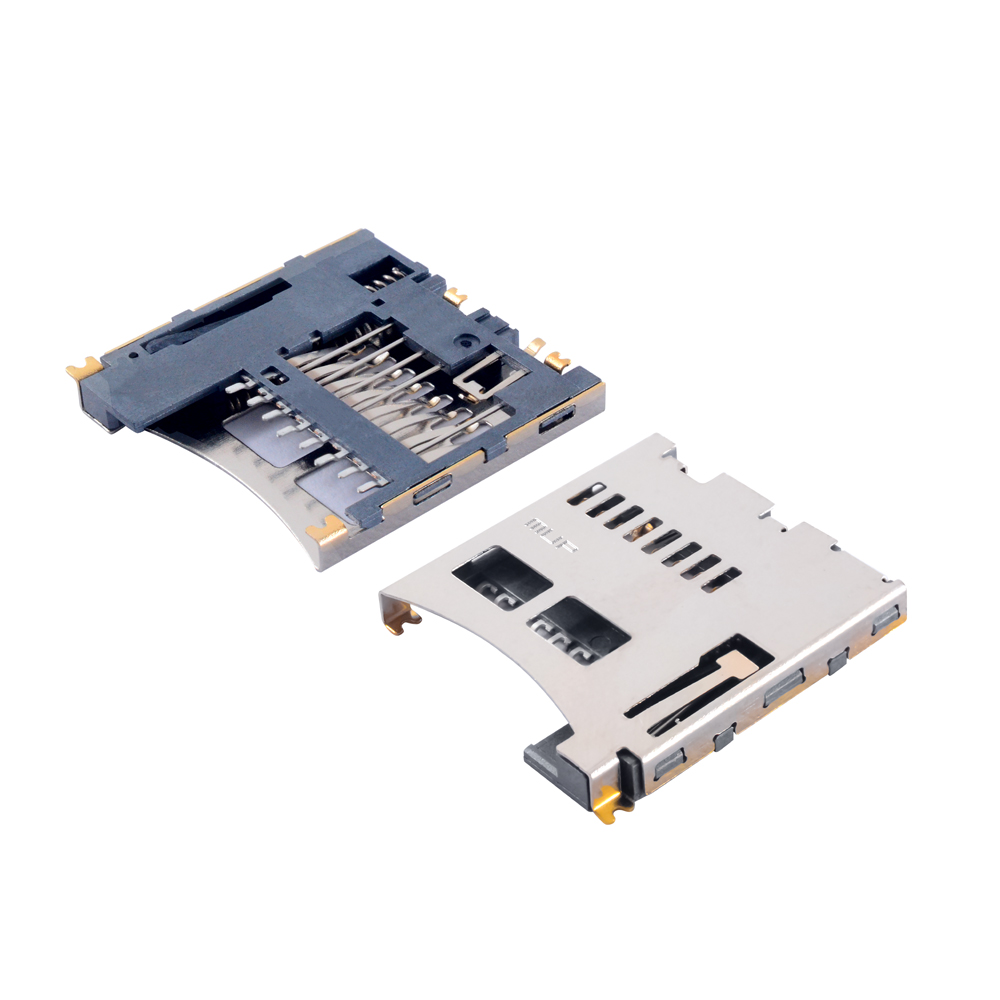
The sequence matters. If the PCB envelope is fixed before the card format and insertion method are agreed, a later change to the connector can force a board revision. If compliance is checked after the sample is approved, a missing RoHS/REACH report can delay customs clearance or customer acceptance. A constraint-led RFQ puts the drawing, ratings, compliance scope, and commercial terms in one package.
Use Cases: Where TF Card Connectors Fit
TF card connectors are used where a removable memory card must connect to a PCB in a compact enclosure. MUP lists applicable industries for its card connector family including financial payment, smart meters, TV displays, notebook computers, IoT, security surveillance, aerospace, drones/UAVs, communication networks, data center/logger, power equipment, industrial equipment, rail transit, medical devices, new-energy vehicles, and 3C consumer electronics. Not every TF model is qualified for every listed industry; the list defines the application landscape, not a blanket approval.
- 3C and consumer electronics: memory expansion or data transfer in compact devices where the card socket must fit a defined PCB area.
- Smart meters and industrial control: data logging or configuration storage where temperature range and long-term contact stability matter.
- Payment terminals and POS devices: card reader architectures that require controlled insertion, durability, and documented compliance.
- IoT and security surveillance: local storage in devices that may see vibration, humidity, or unattended operation.
MUP’s card connector case record covers 500,000 units/pieces for POS terminal and payment clients including Ingenico, PAX, Verifone, Landi, and PayTM, with a duration of 3–15 years and reported results of stable operation, convenient payment, cost reduction, and high reliability. That case is not a TF-only field study; it is evidence that the card connector family has been used in payment environments where insertion, contact reliability, and documentation are part of the buying decision.
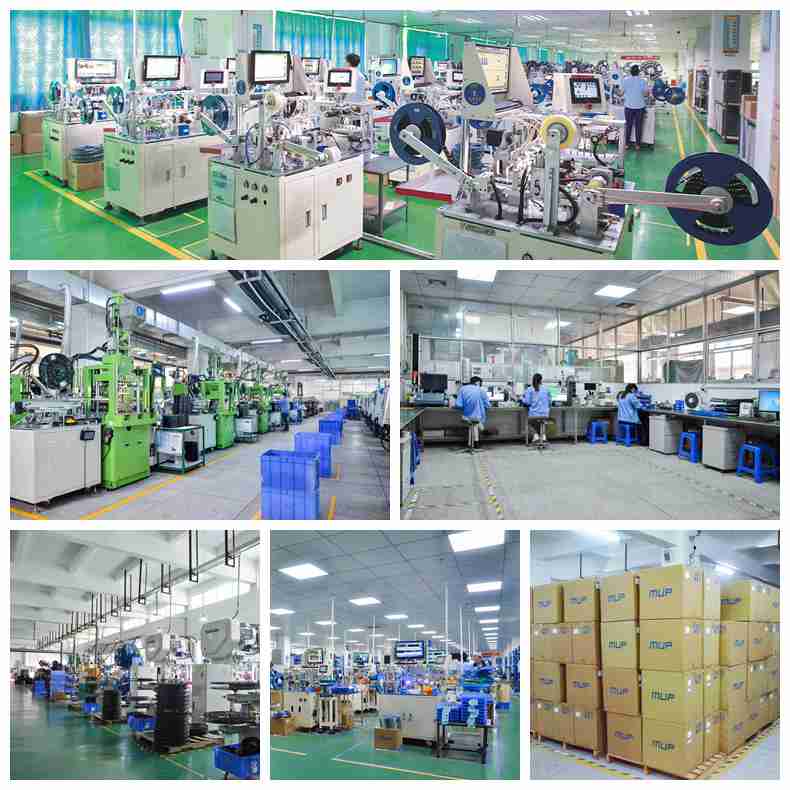
Capacity context is also part of the use-case fit. MUP reports daily capacity exceeding 5KK PCS and monthly capacity over 150KK PCS, supported by fully automated production lines. For a TF card connector buyer, capacity matters when the project moves from sample to mass production; it does not replace the model-level drawing and compliance check.
Comparison Table: TF Card Connector Constraint Matrix
The table below converts the published TF/SD card connector facts into a procurement checklist. It does not rank suppliers or models; it shows which constraint should be written into the RFQ and which verified MUP reference applies.
| Constraint | What to specify in the RFQ | Verified MUP reference | Why it matters |
|---|---|---|---|
| Card format and family | TF/microSD card, TF4.0/7.1 card holder, or related SD card socket; insertion direction | Product family listed as SD card connector, MicroSD/TF card holder, TF4.0/7.1 card holder, smart card socket, and IC card holder/housing; models M6005, M6014, M6015, M6016, M6027, M6110, M6102, M6106, M6109 | Prevents a quote for a related but mechanically different card socket |
| Electrical ratings | Operating current and voltage; confirm they are within the connector rating | 1A max., 10μA min.; 50V max. | Defines the approved operating window; exceeding it invalidates the catalog assumption |
| Temperature and humidity | Operating and storage temperature; operating and storage humidity | -40°C to 85°C operation; -20°C to 35°C storage; 10%–95% RH operation; 10%–75% RH storage | Matches the connector to the enclosure, shipping, and field environment |
| Durability | Expected card insertion/removal cycles; request model-level test report | 3000/5000 cycles for the TF/SD series | Aligns contact wear with the product life and service model |
| Materials | Housing plastic, contact alloy, shell, contact plating | LCP/PA9T high-temperature plastic; phosphor bronze or beryllium copper; SUS304 shell; gold/nickel plated contacts | Supports soldering, contact, and wear evaluation; exposes unexplained substitutions |
| Compliance | RoHS/REACH reports; IATF 16949 and IECQ QC 080000 evidence; certificate scope | RoHS and REACH compliance; IATF 16949 and IECQ QC 080000 for the product; company-level ISO 9001, ISO 14001, ISO 45001, IATF 16949, IECQ QC 080000, and RBA | Prevents customs, audit, and customer-acceptance delays |
| MOQ and packaging | Reel quantity, tape width, sample quantity | Standard products ship on carrier tape reels; MOQ per reel varies by model and packaging, typically 1K–5K PCS/reel; small batch R&D sampling supported | Connects the engineering sample to the production order |
| Lead time | In-stock or mass-production schedule; order quantity | In-stock: 3–7 days; mass production: 15–25 days depending on order and process | Sets realistic launch and replenishment planning |
FAQ: TF Card Connector Compliance, Capability, Budget, and Lead Time
Do Chinese card connector manufacturers with ISO quality systems also supply TF card connectors?
Supplier qualification should be checked at both company and part level. MUP’s card connector portfolio includes SIM, smart/IC, and TF/SD families. The SIM card connector is covered by ISO 9001:2015 certificate CA00527-EN issued by TÜV Saarland. The TF/SD product data states IATF 16949 and IECQ QC 080000. Before approval, request the certificate scope and confirm that the exact TF model is covered.
Does the TF card connector comply with RoHS and REACH?
Yes. MUP states that this connector complies with RoHS and REACH requirements. Official test reports and compliance certificates can be provided upon request for project audit and customs clearance. Certificates are product-type specific, so the request should name the exact model and the market where the document will be used.
What durability can I expect from the TF/SD card connector series?
The TF/SD series is rated for 3000/5000 cycles. A mating cycle is the maximum number of complete plug-in and pull-out operations before electrical failure, and it is a key indicator of long-term contact performance. For a specific model, request the model-level durability report and confirm the test condition before writing the rating into the approval file.
What is the MOQ for TF card connector orders?
Standard products ship on carrier tape reels. MOQ per reel varies by model and packaging, typically 1K–5K PCS/reel. Small batch R&D sampling is supported. Custom designs may change the MOQ depending on complexity, so the RFQ should state the target quantity, package preference, and whether a custom housing or detection switch is required.
What is the lead time for TF card connector samples and mass production?
In-stock items ship within 3–7 days. Mass production is 15–25 days depending on order and process. MUP supports small batch R&D sampling; provide the card format, PCB drawing, target quantity, and required compliance documents so the sample matches the production part. To request a TF card connector sample, datasheet, or quotation, contact MUP at sales@mupconnector.com or +86 189-2373-3085.
Conclusion: Select the TF Card Connector by Written Constraints
A TF card connector is a small component, but the selection is not a small decision. The buyer must align card format, PCB envelope, electrical ratings, temperature and humidity, durability, materials, RoHS/REACH and IATF 16949/IECQ QC 080000 evidence, MOQ, and lead time. MUP’s TF/SD series provides a documented starting point: models M6005, M6014, M6015, M6016, M6027, M6110, M6102, M6106, and M6109; 1A max. / 10μA min.; 50V max.; -40°C to 85°C operation; 3000/5000 cycles; LCP/PA9T, phosphor bronze or beryllium copper, SUS304, and gold/nickel plated contacts.
The next step is to turn those constraints into a part-specific request. Ask for the drawing, the exact model durability report, the RoHS/REACH documents, the certificate scope, the reel quantity, and the sample lead time. A supplier that can answer those items in writing is easier to qualify than one that only shows a product photo.
Next step: Request a TF card connector sample or quotation from MUP. Include the card format, PCB drawing, target quantity, operating environment, and required compliance documents. Email: sales@mupconnector.com | Tel/WhatsApp: +86 189-2373-3085 | Website: www.mupconnector.com.
Download the MUP company profile and product catalog: MUP Profile E 261009.pdf.
Have Questions or Need More Details?
Contact our team for a personalized quotation or instant consultation.
Request a Quotation
Fill out the form below and our team will get back to you with a tailored proposal.
WhatsApp Direct Chat
Prefer to chat in real-time? Message us on WhatsApp for instant assistance & quick answers.
- Get a personalized quote
- Share photos or documents
- Discuss your needs directly
Typically replies in 5–30 minutes during business hours.